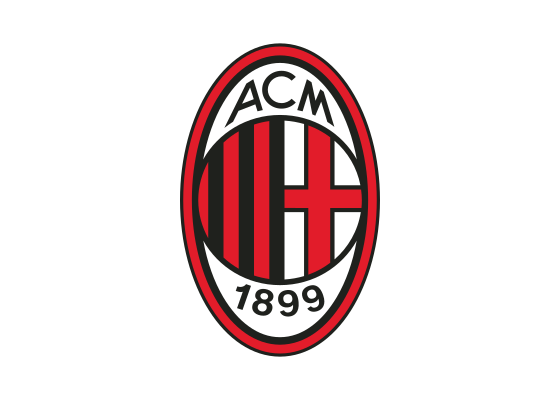
The Milan logo embodies one of football’s most decorated clubs, founded in 1899. The oval crest features the iconic red and black Rossoneri stripes and the Cross of Saint Ambrose, creating a powerful visual identity recognized worldwide through seven European Cup triumphs.
The Milan badge employs a classic oval format divided into two distinct halves. The left side displays red and black vertical stripes, the Rossoneri colors that have defined the club since founding. The right side features the Cross of Saint Ambrose on a white background, Milan’s civic symbol that connects club to city. A golden border frames the composition, adding regal authority appropriate for European royalty. The year “1899” appears prominently, establishing heritage credentials. The overall design balances bold color blocking with heraldic symbolism, creating instant recognition while conveying historical depth.
The color palette makes a bold statement through stark contrast. The red and black stripes create one of football’s most recognizable color combinations, inspired by the colors of the Milan city flag. These Rossoneri (red and blacks) distinguish the club from cross-town rivals Inter, who wear blue and black. The white section provides essential breathing room and hosts the red Cross of Saint Ambrose. Gold accents add prestige befitting a club with 18 league titles and seven European Cups. This carefully orchestrated palette communicates both competitive fire and institutional authority.
Meaning and Symbolism
- Red and black stripes create the iconic Rossoneri identity that defines Milan globally
- Cross of Saint Ambrose incorporates Milan’s civic emblem, connecting club to city heritage
- Oval format follows traditional Italian badge conventions while suggesting completeness
- 1899 foundation date establishes the club among Italy’s founding football institutions
- Golden border adds regal authority befitting one of Europe’s most successful clubs
Design and History
Milan’s visual identity has remained remarkably consistent since the club’s founding by British expatriates in 1899. The red and black colors were reportedly chosen because they were the most visible and intimidating combination available, though some accounts link them to the Milan city flag. The Cross of Saint Ambrose, patron saint of Milan, was incorporated to create civic connection and distinguish the club from rivals. The oval badge format became standard in the mid-20th century, aligning with broader Italian football branding trends.
The club’s golden era under Silvio Berlusconi’s ownership from the late 1980s through the 2000s produced five European Cups and eight Scudetti. The badge worn during these triumphs remains essentially unchanged, forever linking the current design to Milan’s greatest achievements. This continuity has allowed generations of supporters to build emotional connections to consistent visual elements. The Rossoneri stripes transcended sport, becoming recognized even by those with minimal football knowledge.
Recent years have seen Milan modernize operations under American ownership while maintaining traditional visual identity. The logo has undergone subtle refinements for digital reproduction, but the essential character remains intact. This stability serves strategic purposes, as Milan leverages heritage and trophy cabinet to compete with state-backed clubs spending enormous sums. The badge itself functions as valuable intellectual property, appearing on merchandise sold globally to supporters who associate the Rossoneri colors with European excellence.
Typography
While the primary Milan badge relies on the year “1899” as its typographic element, the accompanying wordmark typically uses bold, confident letterforms with Italian flourish. The characters maintain generous proportions, ensuring legibility while conveying strength. When “AC MILAN” appears on the crest’s upper arc, the condensed uppercase letters fit efficiently within the curved space. The overall typographic approach prioritizes clarity and authority, avoiding decorative excess that might diminish the impact of the red and black stripes.
FAQ
Q: What does Rossoneri mean?
A: Rossoneri means “the red and blacks” in Italian, referring to Milan’s distinctive striped colors. This nickname has defined the club since founding in 1899 and distinguishes them from city rivals Inter, who are called Nerazzurri (the black and blues). The Rossoneri identity is recognized worldwide.
Q: What is the Cross of Saint Ambrose on Milan’s badge?
A: The Cross of Saint Ambrose is Milan’s civic emblem, representing the city’s patron saint. This religious symbol has appeared on Milan’s crest since the club’s founding, creating connection between the football club and the city’s broader identity. Saint Ambrose was the 4th-century bishop who became Milan’s most revered figure.
Q: How successful is AC Milan historically?
A: Milan is one of football’s most decorated clubs, with 18 Serie A titles and seven European Cup/Champions League trophies. Only Real Madrid has won more European Cups. Milan also holds three Intercontinental Cups, five UEFA Super Cups, and five Coppa Italia titles. The late 1980s through 2000s represented their most dominant period under Silvio Berlusconi.
More logos with similar colors