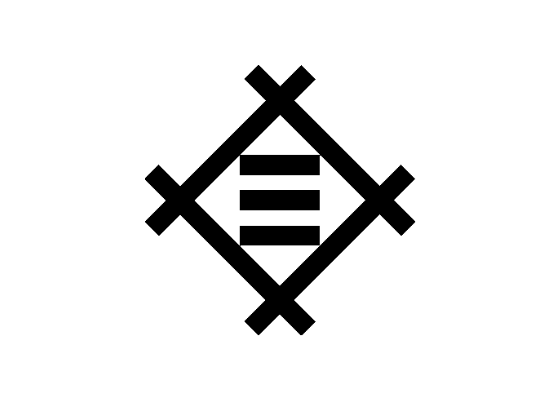
The Mitsui logo features a geometric circular symbol in black, representing one of Japan’s oldest and largest keiretsu (business groups) with origins dating to 1673 and operations spanning trading, manufacturing, banking, and real estate globally.
The Mitsui identity centers on an abstract circular symbol composed of three interlocking circles or overlapping elements, creating a geometric pattern that suggests interconnection, collaboration, and the network structure of keiretsu business groups. The monochrome black conveys seriousness, permanence, and institutional authority appropriate for a 350-year-old merchant house that evolved into one of Japan’s most powerful corporate families. This stark simplicity reflects both traditional Japanese aesthetic restraint and the conservative nature of established zaibatsu that survived World War II dissolution and reconstituted as keiretsu networks.
The symbol’s three-part structure likely references the “Mitsui” name itself, where “mitsu” means “three” in Japanese. This numerical symbolism connects the visual mark directly to company identity while creating a memorable geometric form. The overlapping or interlocking nature of the circles suggests the web of cross-shareholdings, board interlocks, and business relationships that define keiretsu structures, where dozens of companies maintain formal and informal connections through Mitsui Group membership.
Mitsui Group encompasses major corporations including Mitsui & Co. (trading), Sumitomo Mitsui Banking Corporation, Mitsui Fudosan (real estate), Mitsukoshi department stores, and Toyota Motors (historically connected, now independent). This sprawling empire makes Mitsui one of Japan’s most influential business groups, though its decentralized structure and low public profile mean the Mitsui name remains less recognizable globally than individual member companies. The identity system needs to work across this diverse portfolio while maintaining enough neutrality that member companies can develop their own distinct brand personalities.
Meaning and Symbolism
- Three-Part Circular Symbol: References “mitsu” meaning “three” in Japanese while suggesting interconnection, collaboration, and the network structure of keiretsu business groups where dozens of companies maintain cross-shareholdings and relationships.
- Monochrome Black: Conveys institutional permanence, conservative authority, and traditional merchant house values appropriate for a business dating to 1673 that survived zaibatsu dissolution and evolved into modern keiretsu structure.
- Geometric Abstraction: Creates a neutral mark that stretches across diverse Mitsui Group operations including trading, banking, real estate, retail, and manufacturing without favoring any particular industry sector.
- Interlocking Elements: Visually represents the web of formal and informal business connections, board interlocks, and reciprocal shareholdings that define Japanese keiretsu economic organization.
Design and History
Mitsui’s origins trace to 1673 when Takatoshi Mitsui opened a kimono shop and money-changing business in Edo (modern Tokyo), pioneering practices like cash-only sales and money-back guarantees unusual in Japan’s credit-based merchant culture. The Mitsui family expanded into banking, trading, and manufacturing during the Meiji Restoration (1868-1912), when Japan rapidly industrialized. By the early 20th century, Mitsui had become one of Japan’s largest zaibatsu (industrial and financial conglomerates controlled by family-owned holding companies).
After Japan’s World War II defeat, American occupation forces dissolved the zaibatsu to break up concentrated economic power they viewed as supporting militarism. Mitsui Group companies were legally separated, and the family lost controlling stakes. However, former Mitsui companies gradually reestablished relationships through cross-shareholding, shared directors, and coordination councils, reconstituting as a keiretsu (a looser business group lacking centralized control). This structure persists today, with Mitsui Group member companies maintaining preferential business relationships while remaining legally independent entities.
The modern Mitsui Group operates through a coordinating council but lacks the centralized control of pre-war zaibatsu. Member companies span industries including Mitsui & Co. (general trading company or sogo shosha), Sumitomo Mitsui Financial Group (formed through merger with rival Sumitomo zaibatsu), Mitsui Fudosan (largest Japanese real estate company), Mitsui OSK Lines (shipping), and historical connections to Toyota Motor Corporation. The Mitsui identity must balance group cohesion with member company autonomy, explaining the mark’s deliberate neutrality and geometric abstraction.
Typography
The Mitsui wordmark employs a straightforward sans-serif or serif typeface (depending on application) with clean, professional letterforms that project stability and established authority. The typography avoids decorative elements in favor of clarity and legibility, reflecting both Japanese aesthetic restraint and corporate conservatism appropriate for financial services and trading operations. The mark often appears alongside the circular symbol or used independently in contexts where the geometric mark alone might lack sufficient identification. The typeface choice changes across different Mitsui Group entities, with the corporate parent maintaining flexibility for member companies to adapt typography while preserving the circular symbol as the unifying element across the sprawling business group.
FAQ
Q: What is a keiretsu and how does Mitsui fit into this structure?
A: A keiretsu is a Japanese business group of interconnected companies with cross-shareholdings, shared directors, and preferential business relationships. Mitsui Group is one of Japan’s largest keiretsu, descended from the pre-war Mitsui zaibatsu dissolved by American occupation forces in 1947 but reconstituted through voluntary coordination and mutual shareholding.
Q: How old is Mitsui?
A: Mitsui traces its origins to 1673 when Takatoshi Mitsui opened a kimono shop and money-changing business in Edo (Tokyo), making it over 350 years old. The family-controlled merchant house expanded into banking, trading, and manufacturing during Japan’s Meiji Restoration industrialization period starting in 1868.
Q: What companies are part of the Mitsui Group?
A: Major Mitsui Group members include Mitsui & Co. (trading company), Sumitomo Mitsui Banking Corporation (formed through merger), Mitsui Fudosan (real estate), Mitsui OSK Lines (shipping), Mitsukoshi department stores, and historical connections to Toyota Motor Corporation, though group structure is decentralized with no central holding company.