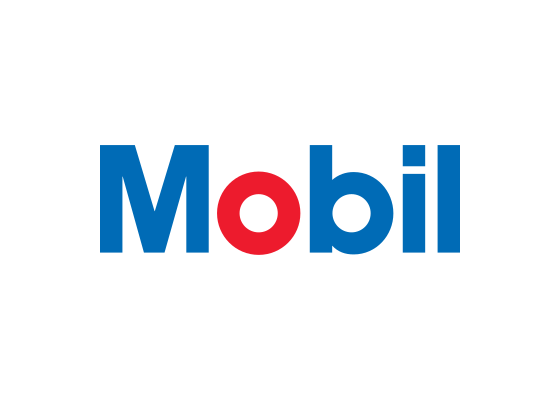
The Mobil logo features a simple, bold wordmark in blue (#006BB6) with a distinctive red (#ED1B2D) “o”, designed by Chermayeff & Geismar in 1966. The red circle aids pronunciation globally and creates one of the most recognizable logos in the petroleum industry, enduring for over 50 years with minimal changes.
Mobil’s logo is a masterclass in functional simplicity. The red “o” solves multiple problems simultaneously. It helps non-English speakers pronounce the brand name correctly, differentiates Mobil from competitors, and creates a visual anchor that makes the logo instantly memorable. The choice of Helvetica-inspired sans-serif typography prioritizes legibility at highway speeds, critical for a brand whose primary customer touchpoint is roadside signage viewed from moving vehicles.
The blue and red color combination is bold without being aggressive. Blue (#006BB6) communicates trust, reliability, and professionalism, standard associations in corporate branding. Red (#ED1B2D) adds energy and attention without overwhelming the design. The two colors together create sufficient contrast to ensure visibility across lighting conditions, weather, and viewing distances. This pragmatic approach reflects the design brief: create signage almost twice as legible as the previous system.
Chermayeff & Geismar’s work extended beyond the logo itself. They developed a comprehensive identity system that included a corporate typeface, standardized graphics guidelines, and applications across service stations, packaging, stationery, and the Mobil Travel Guide. This level of coordination was sophisticated for the 1960s and helped Mobil project a unified, modern image that differentiated it from competitors still using outdated visual systems.
Meaning and Symbolism
- Red “o”: The colored circle aids pronunciation globally, creates visual distinction, and serves as a memorable brand element. It transforms a simple wordmark into an iconic symbol.
- Blue wordmark: Blue (#006BB6) communicates trust, reliability, and professionalism, essential qualities for a petroleum company serving millions of drivers daily.
- Sans-serif typography: The clean, geometric letterforms prioritize legibility at highway speeds, ensuring the logo reads clearly from moving vehicles at significant distances.
- Horizontal orientation: The straightforward arrangement maximizes readability on service station signage, the brand’s primary customer touchpoint.
Design and History
By the mid-1950s, Socony Mobil Oil Company had grown into one of the world’s largest industrial corporations, but research revealed it had one of the weakest corporate images among international oil giants. The company needed a stronger, more modern identity to face an uncertain energy future and growing competition. In 1956, Peter Schladermundt Inc. introduced a revamped logo featuring the flying Red Horse, but the most significant transformation began in 1966 under Rawleigh Warner Jr.’s leadership as president.
Warner Jr., known for his dynamic approach, oversaw the company’s name change to Mobil Oil Corporation, marking a break from its past. He recognized that Mobil’s 26,000 service stations across the U.S. were fundamental to the brand experience and commissioned architect Eliot Noyes to redesign them while Chermayeff & Geismar Associates handled graphic elements.
Chermayeff & Geismar spent months working with Mobil’s marketing and advertising teams to address legibility issues. They were given creative freedom to define objectives and propose solutions. One major decision involved rethinking the Flying Red Horse, which had been central to Mobil’s identity. Rather than discarding it, they redefined its role as a standalone graphic element separate from the primary logo.
The new logotype, inspired by Helvetica and Futura, featured simplified sans-serif letterforms. The iconic red “o” was added to aid pronunciation and reinforce brand recognition globally. Rigorous testing, including visibility studies in real-world conditions, proved the new signs were almost twice as legible as predecessors.
The rollout included standardized graphics guidelines that brought consistency across service stations, packaging, stationery, and the Mobil Travel Guide. While initial conversion costs were significant, the new design proved cost-effective long-term, saving Mobil substantial amounts annually compared to old signs. The logo continues in use today, testament to its enduring effectiveness.
Typography
The Mobil wordmark uses a sans-serif typeface inspired by Helvetica and Futura, with clean, geometric letterforms optimized for maximum legibility. The letters are evenly spaced and consistently weighted, ensuring clarity at all sizes and viewing distances. The typography was designed specifically for highway-speed readability, making it one of the most functionally successful logos in petroleum branding.
FAQ
Q: Why is the “o” in Mobil red?
A: The red “o” aids global pronunciation of the brand name, creates visual distinction from competitors, and serves as a memorable brand element that makes the logo instantly recognizable.
Q: Who designed the Mobil logo?
A: Chermayeff & Geismar Associates designed the logo in 1966 as part of a comprehensive corporate identity program led by Eliot Noyes for Mobil Oil Corporation.
Q: How did Mobil test the new logo’s effectiveness?
A: Chermayeff & Geismar conducted rigorous visibility studies in real-world conditions, proving the new signage was almost twice as legible as the previous system when viewed from moving vehicles.
More logos with similar colors