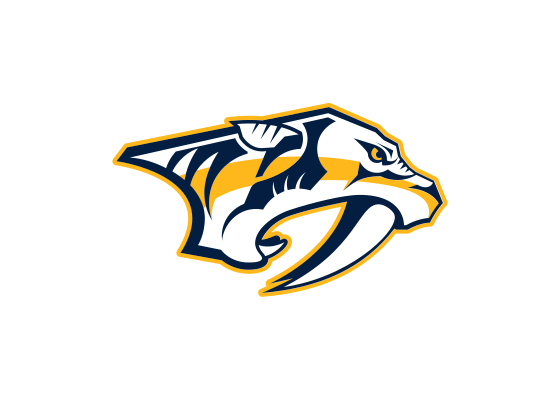
The Nashville Predators logo features a snarling saber-toothed tiger in profile, connecting the team name to a prehistoric predator whose fossilized remains were discovered during construction of downtown Nashville’s tallest building in 1971.
The Predators identity successfully transforms a paleontological discovery into a modern sports brand. Rather than choosing predictable music industry imagery for Music City, the franchise built its visual language around the saber-toothed cat skeleton found during UBS Tower construction. This unique regional connection gives Nashville intellectual property no other team can claim while maintaining the aggression and power expected from predator-based branding.
The 2011 redesign simplified the six-color original into a cleaner three-color system (navy, gold, white) that improved reproduction and modernized the aesthetic. By reducing visual complexity while maintaining the snarling cat’s fierce expression, the update demonstrated how simplification often strengthens rather than weakens brand impact. The result is a logo that reads clearly at thumbnail size on mobile devices while retaining enough detail to reward inspection on large-format applications.
Meaning and Symbolism
- The saber-toothed tiger (Smilodon floridanus) references fossils discovered during 1971 Nashville construction, creating unique regional relevance
- Navy and gold palette avoids obvious music industry associations while honoring Tennessee’s three blue stars on white flag
- Snarling expression with visible fangs communicates aggression appropriate to both prehistoric predator and competitive hockey
- Profile orientation suggests forward motion and relentless pursuit of prey (opponents)
- Secondary logos featuring guitar pick shapes and Tennessee stars bridge the paleontological theme with Nashville’s cultural identity
Design and History
When Nashville secured an NHL expansion franchise in 1997, management held a naming contest that generated 75 submissions. The final three (Ice Tigers, Fury, Attack) all tested poorly until team owner Craig Leipold proposed “Predators,” connecting to both the saber-tooth discovery and broader themes of hunting and dominance. The name allowed for visual flexibility while maintaining Nashville specificity through the particular predator species chosen.
The original 1998 logo featured intricate detail across six colors (navy, gold, silver, white, orange-red, black), creating a complex mark that struggled at small sizes and in single-color reproduction. The design showed technical skill but insufficient restraint for practical application across modern media. When the team revisited the identity in 2011, they maintained the core snarling cat concept while stripping away unnecessary elements.
The 2011 update refined the cat’s anatomy, simplified color zones, and increased contrast between elements. The pupil became more defined, whiskers were removed, and the gold tones shifted to warmer, more saturated values. These changes produced a mark that feels both fiercer and more contemporary, proving that effective redesign often means revealing rather than adding.
Typography
The Predators wordmark evolved significantly from the original Interdiction typeface to a custom face featuring sharper decorative elements that echo the saber teeth. The current letterforms balance aggressive serifs and angular terminals with enough restraint to maintain readability. The combination of sharp details and curved baselines creates visual interest while the navy and gold execution ensures the type coordinates with the primary mark rather than competing against it.
FAQ
Q: Why a saber-toothed tiger instead of music-related imagery? A: While Nashville is globally known as Music City, music imagery would have been generic and difficult to own. The saber-tooth fossil discovery gave the franchise a unique regional story that differentiated them from teams using musical themes. The name “Predators” also carried broader menace beyond the specific extinct cat.
Q: What happened to the more complex original logo? A: The six-color 1998 design proved difficult to reproduce consistently across applications and looked dated as digital media became dominant. The 2011 simplification reduced colors, increased contrast, and refined details, creating a mark better suited to modern reproduction technologies and small-scale digital viewing.
Q: Why do the secondary logos feature guitar picks? A: While the primary mark focuses on paleontology, the broader brand system acknowledges Nashville’s musical heritage through guitar pick shapes containing the logo or incorporating Tennessee’s three-star flag motif. This allows the franchise to honor both unique historical discovery and cultural context.
More logos with similar colors