Winter Olympic Games Logos
The 1984 Winter Olympics, officially the XIV Olympic Winter Games, were held in Sarajevo, Yugoslavia (present-day Bosnia and Herzegovina), from February 8 to 19, 1984. The Games were the first Winter Olympics held in a socialist state and, notably, the only Olympics hosted by a Muslim-majority city. Sarajevo beat Sapporo, Japan, and Gothenburg, Sweden, for the hosting rights. The Games featured 39 events across 10 disciplines, with athletes from 49 nations competing.
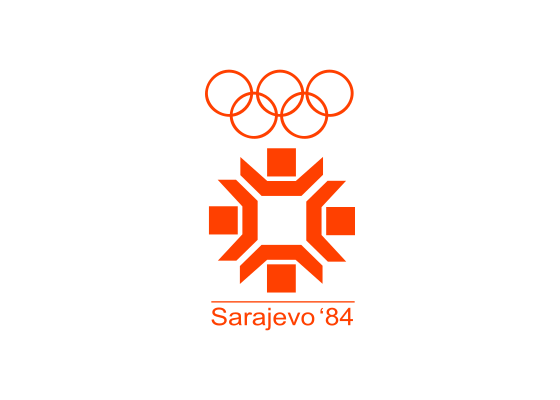
The Sarajevo 1984 emblem is a stylized snowflake incorporating motifs drawn from traditional Bosnian kilim (flatweave carpet) patterns. The snowflake form is rendered in a distinctive orange-red color, with geometric elements that reference the folk art of the region. The design takes the universal symbol of winter, the snowflake, and transforms it through the application of Bosnian decorative tradition, creating a mark that communicates both “winter” and “this specific place.” Below the snowflake, “SARAJEVO ‘84” is set in a clean typeface with the Olympic rings beneath. The emblem’s folk-art quality gave it a warmth and character that set it apart from the more corporate Olympic designs of the era.
Meaning and Symbolism
- Snowflake form: The snowflake is the most universal symbol of winter, immediately communicating the nature of the Games. The six-pointed radial symmetry is true to the crystalline structure of actual snowflakes.
- Bosnian kilim patterns: The geometric motifs within the snowflake are drawn from traditional Bosnian kilim carpets, a folk art form with centuries of history in the region. These patterns connected the emblem to the specific cultural identity of Sarajevo and Bosnia, rather than to a generic notion of winter.
- Orange-red color: The warm, orange-red color was an unconventional choice for a Winter Olympics. It referenced the warm tones found in Bosnian textiles and ceramics, and it gave the emblem a distinctive warmth that contrasted with the cold setting.
- Folk art meets sport: The combination of traditional decorative pattern with the Olympic snowflake represented Sarajevo’s identity as a place where Eastern and Western cultural traditions met, a crossroads city with a rich, layered cultural heritage.
Design and History
The Sarajevo 1984 emblem was developed to communicate the unique cultural character of a host city that sat at the intersection of Ottoman, Austro-Hungarian, and Yugoslav cultural traditions. Sarajevo was not a typical Winter Olympics venue. It was a multicultural city in the Balkans, known for its mosques, Orthodox churches, Catholic cathedrals, and synagogues coexisting within a compact urban center. The emblem’s folk-art quality reflected this cultural richness.
The use of kilim patterns was a specific and informed cultural choice. Bosnian kilims are among the most distinctive textile traditions in Southeast Europe, characterized by bold geometric motifs in warm earth tones. By embedding these patterns within a snowflake form, the design team created a visual bridge between the universal language of winter sports and the specific decorative heritage of the host region.
The 1984 Games were well-organized and fondly remembered. The mascot, Vucko, a cheerful wolf character, became one of the most popular Olympic mascots in history. The Games produced memorable sporting moments and established Sarajevo as a viable international winter sports venue.
The emblem’s legacy is inseparable from the tragedy that followed. Less than a decade after the Olympic Games, Sarajevo was besieged during the Bosnian War (1992-1996). Olympic venues were destroyed or repurposed as military positions. The bobsled track became a frontline position. The ice hall was severely damaged. The contrast between the joyful, multicultural celebration of 1984 and the devastating ethnic conflict that followed gave the Sarajevo emblem a poignancy that no other Olympic symbol carries. The snowflake with its folk-art patterns became a symbol not just of the Games but of a city and a way of life that was nearly destroyed.
Periodic efforts to restore the Olympic venues have continued in the decades since the war, with the sites serving as both sports facilities and memorials to the city’s Olympic heritage and the peace that the Games represented.
Typography
“SARAJEVO ‘84” is set in a clean sans-serif typeface beneath the snowflake emblem. The abbreviated year format matches the informal, approachable character of the design. The typography is functional and restrained, allowing the distinctive snowflake to carry the visual identity. For the broader brand system, typefaces maintained legibility and warmth across the range of Olympic applications.
FAQ
Q: What is the pattern in the Sarajevo 1984 snowflake?
A: The geometric motifs within the snowflake are drawn from traditional Bosnian kilim (flatweave carpet) patterns, a folk art form with centuries of history in the region. They connect the emblem to Sarajevo’s specific cultural identity.
Q: Why is the Sarajevo 1984 emblem orange instead of blue or white?
A: The warm orange-red color references the warm tones found in Bosnian textiles and ceramics. It was an unconventional choice for a Winter Olympics that gave the emblem a distinctive warmth and character.
Q: What happened to the Sarajevo Olympic venues?
A: Many venues were damaged or destroyed during the Bosnian War (1992-1996). The bobsled track became a frontline position, and the ice hall was severely damaged. Restoration efforts have continued in the decades since, with the sites serving as both sports facilities and memorials.
The Sarajevo 1984 emblem and Olympic rings are trademarks of the International Olympic Committee. This page is for educational and reference purposes only.