Winter Olympic Games Logos
The 2002 Winter Olympics, officially the XIX Olympic Winter Games, were held in Salt Lake City, Utah, from February 8 to 24, 2002. The Games took on special significance as the first Olympics held after the September 11, 2001 attacks, with security and national unity becoming central themes. The Games featured 78 events across 15 disciplines, with athletes from 77 nations competing.
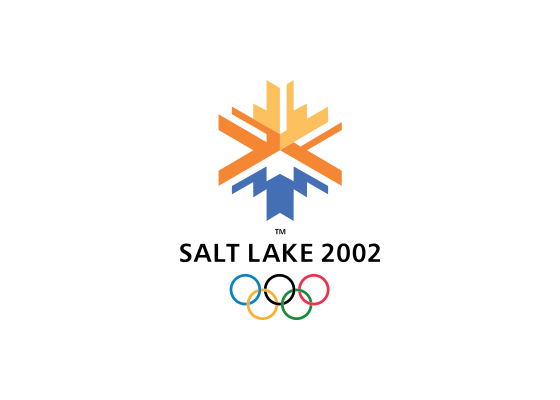
The Salt Lake 2002 emblem is a stylized snowflake-crystal form incorporating the warm colors of a Utah sunset over the Wasatch Mountains. The design departs from the cool blues and whites typical of Winter Olympics branding, instead using a gradient palette that shifts from deep blue at the top through orange, gold, and coral, colors drawn directly from the dramatic sunsets visible over the mountains surrounding Salt Lake City. The crystal shape is angular and geometric, with faceted surfaces that suggest both a snowflake and a mountain peak. Below the mark, “Salt Lake 2002” is set in a clean typeface with the Olympic rings beneath. The emblem communicates a specific sense of place: this is winter in the American West, where snow-covered mountains glow warm at sunset.
Meaning and Symbolism
- Warm sunset palette: The orange, gold, and coral tones reference the sunsets over the Wasatch Range that define the visual character of Utah’s mountain landscape. This was a bold departure from the blue-and-white conventions of Winter Olympics branding, asserting that winter in the American West is defined by warmth and light as much as by cold and snow.
- Crystal/snowflake form: The angular, faceted shape works as both a snowflake and a mountain peak, dual references that connect winter sports to their landscape. The geometric precision of the facets suggests the crystalline structure of ice and snow.
- Mountain reference: The upward-pointing form and the color gradient, darker at the top and warmer below, evoke the profile of the Wasatch Mountains as they catch the last light of a winter afternoon.
- American West identity: Unlike many Winter Olympics held in European alpine settings, Salt Lake City brought a distinctly American Western character to the Games. The emblem’s warm palette and angular geometry communicated the rugged, expansive quality of the Utah landscape.
Design and History
The Salt Lake 2002 emblem was developed to capture the unique visual character of Utah’s mountain environment. The creative team studied the landscape extensively, noting that the most distinctive visual quality of winter in the Salt Lake region is not the snow itself but the extraordinary light that transforms the mountains at sunrise and sunset.
The decision to use warm colors for a Winter Olympics was counterintuitive and effective. Most Winter Games lean into blue, white, and silver to communicate cold and ice. Salt Lake 2002 recognized that its landscape told a different story, one of golden light on snow, warm stone against cold sky, and the vivid colors that altitude and dry air produce in the atmosphere. The emblem captures that specific quality of light.
The Games themselves were charged with emotion beyond the usual Olympic significance. Held just five months after the September 11 attacks, they became a moment of national gathering and resilience. The opening ceremony featured the tattered American flag recovered from the World Trade Center, carried by members of the New York Police and Fire departments and a delegation of Olympic athletes. The visual identity, with its warm, welcoming colors, provided an appropriate backdrop for Games that emphasized unity and healing.
The broader brand system extended the sunset palette across venues, merchandise, and broadcast graphics. The environmental design transformed Salt Lake City and the mountain venues into a cohesive visual experience that reflected the Utah landscape rather than generic winter imagery. The pictogram set maintained the angular, faceted quality of the emblem, creating visual continuity across all sporting events.
Salt Lake City’s bid process had been marred by a bribery scandal that led to significant reforms in how the IOC awarded Games. The visual identity, by focusing on the beauty of the location rather than institutional symbolism, helped shift attention toward the athletic competition and the landscape.
Typography
“Salt Lake 2002” is set in a clean, modern sans-serif typeface that complements the geometric precision of the crystal emblem. The letterforms are straightforward and legible, providing a neutral typographic foundation that allows the emblem’s distinctive color palette and angular form to carry the visual identity. For the broader brand system, typography maintained this clean, accessible quality across wayfinding, publications, and digital communications.
FAQ
Q: Why does the Salt Lake 2002 logo use warm colors instead of typical winter blues?
A: The warm orange, gold, and coral tones reference the dramatic sunsets over Utah’s Wasatch Mountains. The design team chose to capture the specific quality of winter light in the American West rather than defaulting to the cool blues typical of Winter Olympics branding.
Q: What does the crystal shape represent?
A: The angular, faceted form works as both a snowflake and a mountain peak, connecting the winter sports to the Utah mountain landscape. The geometric precision suggests the crystalline structure of ice and snow.
Q: Why were the 2002 Olympics historically significant?
A: They were the first Olympics held after the September 11, 2001 attacks, giving the Games special significance as a moment of national unity and resilience. The opening ceremony featured the tattered American flag recovered from the World Trade Center.
The Salt Lake 2002 emblem and Olympic rings are trademarks of the International Olympic Committee. This page is for educational and reference purposes only.
More logos with similar colors