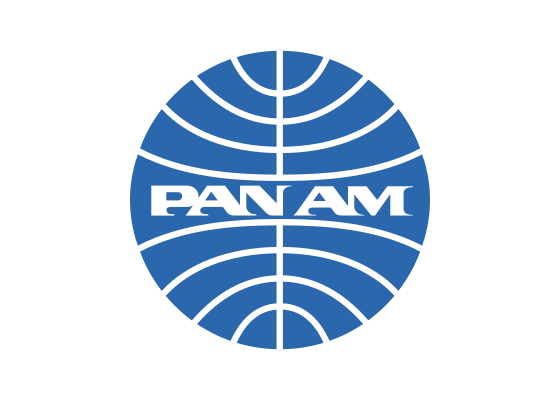
The Pan Am logo features a blue globe bisected by white latitude lines, with “Pan Am” lettering across the center in bold sans-serif typography.
The globe design immediately communicated worldwide reach at a time when international air travel was still exotic and aspirational. The blue (#2b67ac) conveys trust and reliability, essential qualities for an airline pioneering transoceanic routes in the jet age. The clean, geometric construction reflects the modernist design ethos of mid-century America, positioning Pan Am as forward-thinking and technologically advanced.
The bisecting lines suggest both navigation and connection, mapping the routes that would link continents. This visual simplicity made the logo instantly recognizable on airport signage, ticket jackets, and the fuselages of 747s. The design embodied the glamour of international travel during aviation’s golden age, when flying Pan Am meant prestige and sophistication.
Meaning and Symbolism
- Blue globe: Represents global reach and Pan Am’s dominance of international routes across six continents
- White latitude lines: Symbolize navigation, precision, and the airline’s role connecting distant destinations
- Bold sans-serif lettering: Conveys modernity, confidence, and American technological leadership
- Circular form: Suggests completeness, unity, and the airline’s comprehensive network spanning the world
Design and History
Edward Larrabee Barnes designed the iconic globe logo in 1955, replacing earlier variations that included eagles and wings. The timing coincided with Pan Am’s transition to jet aircraft, and the modernist aesthetic aligned with the airline’s role pioneering Boeing 707 service. The logo appeared on everything from ticket counters to the nose of the first 747, delivered to Pan Am in 1970.
The design remained remarkably consistent through Pan Am’s 64-year history, undergoing only minor refinements. This continuity helped cement the airline’s identity as “America’s unofficial flag carrier” and a symbol of postwar American influence. The logo’s cultural impact extended beyond aviation, appearing in films, posters, and popular culture as shorthand for international sophistication.
When Pan Am ceased operations in 1991, the logo had become so iconic that it retained commercial value. The brand and globe symbol have been licensed for various ventures, though none recaptured the original airline’s prestige. The logo remains one of aviation’s most recognizable designs, representing an era when air travel represented adventure rather than routine transportation.
Typography
The original “Pan Am” wordmark used a custom bold sans-serif typeface with slightly condensed proportions to fit within the globe’s limited space. The letters feature uniform stroke weights and geometric construction typical of 1950s modernist typography. The white lettering against blue provides maximum contrast for visibility, critical for airport wayfinding and aircraft identification. Later versions occasionally used Helvetica Bold for consistency across marketing materials, though the logo itself maintained its custom letterforms.
FAQ
Q: Why did Pan Am choose a globe for its logo?
A: The globe symbolized Pan Am’s unique position as the first airline with truly worldwide routes, spanning six continents and pioneering transoceanic jet service.
Q: When was the blue globe logo introduced?
A: Edward Larrabee Barnes designed the globe logo in 1955, replacing earlier designs featuring eagles and wings with a cleaner, more modern aesthetic.
Q: Does the Pan Am logo still exist after the airline’s bankruptcy?
A: Yes, the Pan Am brand and logo have been licensed for various ventures since 1991, though the original airline ceased operations. The logo remains one of aviation’s most iconic designs.