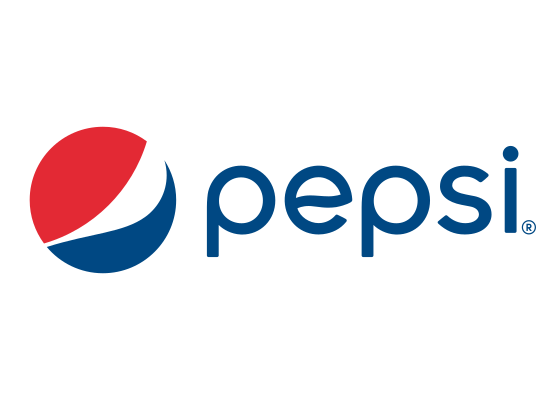
The Pepsi logo features a circular globe design with red and blue spheres separated by a white wave, creating a dynamic symbol that has evolved dramatically over the brand’s 125-year history.
The current logo, introduced in 2008 and refined in 2023, uses a sphere divided by an asymmetric white curve that creates a visual smile. The top half is predominantly blue (#004883), and the bottom half is red (#e32934), with white forming a dynamic wave between them. The wordmark “PEPSI” appears in a custom sans-serif typeface designed to complement the globe symbol. The circular form suggests unity and global reach, while the red and blue palette evokes both American patriotism and the universal appeal of refreshment.
The logo’s evolution reflects Pepsi’s strategy of periodic reinvention to maintain relevance with younger consumers. While Coca-Cola has kept essentially the same script for 140 years, Pepsi has embraced change, using logo updates to signal innovation and forward momentum. Each redesign has maintained the red, white, and blue color scheme that became synonymous with the brand in the mid-20th century.
Meaning and Symbolism
- Circular globe: The sphere represents unity, global presence, and the brand’s worldwide reach. The circular form is complete and balanced, suggesting wholeness and satisfaction.
- Red color (#e32934): Conveys energy, excitement, and passion. Red stimulates appetite and creates visual impact, essential for a soft drink brand competing for attention in retail environments.
- Blue color (#004883): Represents trust, reliability, and refreshment. The cool blue balances the warm red and suggests the cooling sensation of a cold drink.
- White wave: The asymmetric curve creates movement and energy while forming a subtle smile shape, reinforcing Pepsi’s association with enjoyment and youthful optimism.
Design and History
Caleb Bradham, a North Carolina pharmacist, created Pepsi-Cola in 1898 as a fountain drink originally called “Brad’s Drink.” The early logo used ornate Victorian script typical of patent medicines and fountain beverages of the era. As the company grew through the early 20th century, the branding evolved from decorative scripts to more modern treatments.
In the 1940s, Pepsi adopted the red, white, and blue bottle cap motif that would define the brand for decades. The patriotic colors resonated during and after World War II, positioning Pepsi as an American brand at a time when that association carried significant cultural weight. The circular bottle cap design provided a distinct visual identity that differentiated Pepsi from Coca-Cola’s flowing script.
The 2008 redesign by the Arnell Group was one of the most discussed brand updates in recent history. The agency stripped away the previous three-dimensional bottle cap rendering in favor of a simplified, flat globe with an asymmetric white curve. Gerard Huerta designed the “Pepsi Light” typeface to complement the new globe. The design rationale, which included references to the golden ratio, magnetic fields, and cosmic forces, was widely mocked, but the logo itself proved effective in retail applications and digital media.
The 2023 update by PepsiCo’s in-house Design & Innovation team modernized the color palette with more vibrant, electric blues and refined the typography for better digital performance. The globe symbol remained fundamentally unchanged, demonstrating that the 2008 concept had achieved the durability that Pepsi’s earlier logos lacked.
Typography
The Pepsi wordmark uses Pepsi Light, a custom sans-serif typeface designed by Gerard Huerta in 2008. The letters are geometric and slightly condensed, with rounded terminals that complement the circular globe symbol. The typeface is clean and modern, designed to work across digital platforms and physical packaging. The letterforms have generous x-heights and open counters for legibility at small sizes. For broader brand communications, Pepsi uses a system of contemporary sans-serif typefaces that maintain the energetic, youthful quality of the brand voice.
FAQ
Q: Who designed the current Pepsi logo?
A: The 2008 redesign was by the Arnell Group, with typography by Gerard Huerta. The 2023 refinements were by PepsiCo’s in-house Design & Innovation team.
Q: What do the red and blue colors represent?
A: Red (#e32934) symbolizes energy and excitement, while blue (#004883) represents trust and refreshment. Together they create a balanced, recognizable palette.
Q: Why does Pepsi change its logo so frequently?
A: Pepsi’s strategy involves periodic reinvention to signal innovation and maintain relevance with younger consumers, contrasting with Coca-Cola’s consistency-based approach.
More logos with similar colors