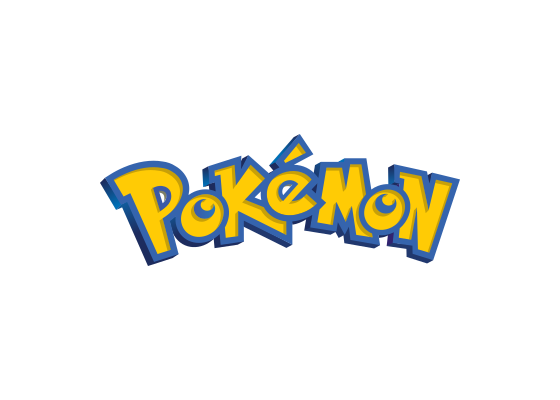
The Pokémon logo features stylized blue and yellow letterforms with a distinctive accent mark over the “e,” representing the highest-grossing media franchise of all time with $90 billion in total revenue. This bold typographic identity has remained remarkably consistent since 1996, spanning video games, trading cards, anime series, films, and merchandise across global markets.
The custom letterforms combine geometric precision with playful energy, balancing broad appeal across age groups from young children to nostalgic adults. The vibrant blue (#0070b6) conveys adventure and reliability while the bright yellow (#ffcb05) accent provides visibility and optimism, matching Pikachu’s iconic coloring. The acute accent over the “e” (creating “Pokémon” rather than “Pokemon”) maintains the Japanese pronunciation while adding distinctive visual flair that aids trademark protection.
The logo appears with remarkable consistency across hundreds of products, regional markets, and decades of releases. This stability reflects Nintendo’s careful brand stewardship and the Pokémon Company’s understanding that consistency builds recognition across generations. Young players encounter the same logo their parents saw on Game Boy cartridges in the 1990s, creating multigenerational brand equity unmatched in gaming.
Meaning and Symbolism
- Blue and yellow palette: Combines adventure and reliability (blue) with optimism and energy (yellow), while referencing Pikachu’s signature coloring.
- Acute accent mark: Maintains Japanese pronunciation “Pokémon” over anglicized “Pokemon,” adding visual distinction and trademark protection.
- Bold, playful letterforms: Balance broad appeal from young children to adult collectors, supporting a franchise spanning all age demographics.
- Geometric with organic touches: Combines precision and approachability, reflecting the franchise’s blend of strategic depth and accessible charm.
Design and History
Satoshi Tajiri created Pokémon in 1995, inspired by childhood insect collecting. Game Freak developed Pokémon Red and Green for Nintendo’s Game Boy, launching in Japan in February 1996. The franchise exploded globally when Pokémon Red and Blue reached North America in 1998, accompanied by the anime series featuring Ash Ketchum and Pikachu. The logo’s blue and yellow instantly became recognizable across schoolyards worldwide.
The Pokémon Company was established in 1998 to manage the franchise across three shareholders: Nintendo, Game Freak, and Creatures Inc. This unique structure allowed coordinated expansion across video games, trading cards, anime, films, and merchandise. The logo appeared consistently across all these products, building unified brand recognition. By 2006’s tenth anniversary, Pokémon had become a cultural institution with dedicated fans spanning multiple generations.
Pokémon Go’s 2016 mobile release demonstrated the franchise’s enduring appeal, attracting players who hadn’t engaged with the series since childhood. The logo remained unchanged, instantly recognizable to millennials and Gen Z players alike. With over 346 million video games sold, 28.8 billion trading cards distributed, and successful entertainment expansions including 2019’s Detective Pikachu film, the blue and yellow wordmark represents unprecedented multimedia success. The franchise continues generating billions annually through new games, cards, and merchandise.
Typography
The Pokémon wordmark uses a heavily customized display typeface with distinctive geometric construction and playful personality. The letterforms feature rounded terminals and consistent stroke weights that create approachability and energy. The “o” characters use perfect circles, while the “P” and “k” include subtle angular details that add visual interest without compromising legibility. The acute accent over the “e” integrates seamlessly into the letter’s construction, appearing natural rather than added afterward. The blue letterforms typically include subtle dimensional shading or outlines that enhance visibility across different backgrounds and applications. The proportions remain consistent globally except where local language requirements necessitate adaptation, maintaining brand unity across Japanese, English, and other language markets.
FAQ
Q: Why does Pokémon use an accent mark over the “e”?
A: The acute accent maintains the Japanese pronunciation “Pokémon” (derived from “Pocket Monsters”) rather than anglicized “Pokemon,” while providing distinctive visual identity and trademark protection.
Q: How successful has the Pokémon franchise become?
A: Pokémon is the highest-grossing media franchise ever with $90 billion in revenue, including 346 million video games sold, 28.8 billion trading cards distributed, and successful anime, film, and merchandise expansions.
Q: Who owns the Pokémon brand?
A: The Pokémon Company manages the franchise with ownership divided among Nintendo, Game Freak, and Creatures Inc., with Nintendo holding the sole international trademark rights.
More logos with similar colors