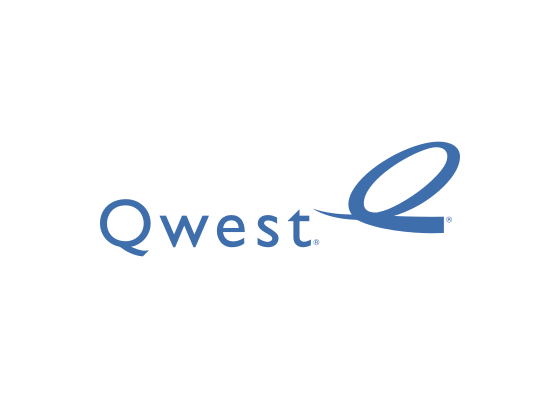
The Qwest logo used abstract geometric design in corporate blue to represent the telecommunications carrier’s expansive network across 14 western and midwestern states before its 2011 acquisition by CenturyLink.
Meaning and Symbolism
- Blue color conveys trust, reliability, and technical competence—fundamental requirements for telecommunications infrastructure providers
- Abstract geometric symbol suggests network connectivity, signal transmission, and the technological backbone of modern communication
- The mark’s corporate restraint reflected Qwest’s focus on infrastructure and wholesale services rather than consumer retail branding
- Design simplicity ensured recognition across diverse markets from Arizona to Wyoming, spanning rural and urban territories
- The professional aesthetic positioned Qwest as an enterprise-grade carrier competing against traditional Bell System successors
History and Evolution
Qwest Communications International was a major U.S. telecommunications carrier providing local service across 14 western and midwestern states: Arizona, Colorado, Idaho, Iowa, Minnesota, Montana, Nebraska, New Mexico, North Dakota, Oregon, South Dakota, Utah, Washington, and Wyoming. The company operated three business segments: Wireline Services (local voice, long-distance, data, and Internet), Wireless Services (through partnership with Verizon Wireless), and Other Services including digital television in select markets.
On April 22, 2010, CenturyLink announced it would acquire Qwest in a stock transaction valued at approximately $10.6 billion. The merger closed April 1, 2011, creating the third-largest telecommunications company in the United States. Qwest began operating as CenturyLink in August 2011, and the Qwest brand was phased out. The acquisition gave CenturyLink significant presence in western markets, complementing its traditional strength in the Southeast and creating a nationwide footprint.
Typography and Design
The Qwest wordmark employed clean, professional sans-serif typography with a distinctive lowercase “q” that created brand recognition while maintaining corporate credibility. The letterforms featured balanced proportions and consistent stroke weights appropriate for telecommunications industry applications. The abstract geometric symbol accompanying the wordmark suggested network infrastructure through intersecting lines or stylized connection points, though never becoming overly technical or complex. The blue color palette ensured consistency with telecommunications industry conventions while differentiating from regional Bell operating companies’ specific color signatures. The overall design reflected late 1990s corporate branding: professional, technologically oriented, and focused on business credibility over consumer emotional appeal.
Frequently Asked Questions
Who designed the Qwest logo? The Qwest logo was developed during the company’s formation, though the specific designer or agency has not been widely documented. The mark reflected telecommunications industry design conventions of the late 1990s and early 2000s.
When did Qwest stop using its logo? Qwest stopped using its logo in 2011 after CenturyLink acquired the company. The transition to CenturyLink branding was completed by August 2011, ending Qwest’s 20+ year brand presence in western telecommunications markets.
What do the colors in the Qwest logo represent? The blue color represented trust, reliability, and technological expertise—essential qualities for telecommunications infrastructure. The single-color approach ensured cost-effective reproduction across signage, billing materials, and network equipment.