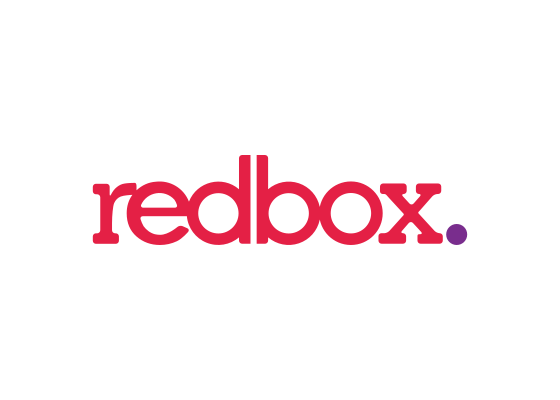
Redbox’s vibrant gradient logo flows from magenta to red, mirroring the bold color scheme of the 40,000+ automated kiosks that revolutionized video rental by placing entertainment in convenience stores and grocery stores across America.
Meaning and Symbolism
- The magenta-to-red gradient (#792d8d to #e42045) creates visual energy and excitement, evoking the anticipation of movie night and entertainment discovery
- The bright red hue matches the physical kiosks themselves, creating instant brand recognition and reinforcing the connection between digital branding and physical presence
- The vibrant color palette stands out in retail environments, drawing attention in crowded grocery stores, gas stations, and pharmacies where kiosks are placed
- The lowercase, rounded letterforms suggest approachability and simplicity, reinforcing the brand promise of easy, affordable entertainment
- The gradient effect adds dimension and modernity, distinguishing Redbox from flat, static rental competitors like traditional video stores
History and Evolution
Redbox was founded in 2002 by Gregg Kaplan at McDonald’s Ventures as an experiment in automated retail. The first kiosk was installed in a Washington, D.C. McDonald’s location, offering DVD rentals for $1 per night—drastically undercutting Blockbuster’s $4-5 rental fees. The signature red color was chosen for high visibility in retail environments, while the automated kiosk model eliminated labor costs and enabled 24/7 access.
Coinstar acquired Redbox in 2009 for $176 million, investing heavily in nationwide expansion. At its peak in 2013, Redbox operated over 43,000 kiosks across the United States, renting 500+ million discs annually and generating $1.97 billion in revenue. The company successfully navigated the decline of DVD rental through strategic placement in high-traffic locations and by adding Blu-ray and video game rentals. Redbox became America’s dominant physical media rental service after Blockbuster’s bankruptcy in 2010.
The 2017 logo redesign introduced the gradient treatment, modernizing the brand for the streaming era while maintaining the iconic red color. As streaming services proliferated, Redbox adapted by launching Redbox On Demand digital rental service and Redbox Free Live TV streaming in 2019. However, the company filed for bankruptcy in 2024 as physical media demand collapsed, with most kiosks shut down and the business restructured under new ownership seeking to pivot toward streaming-first entertainment delivery.
Typography and Design
The Redbox wordmark uses a custom rounded sans-serif typeface with soft, friendly curves that make the brand feel accessible and unpretentious. The lowercase styling removes formality and corporate distance, positioning Redbox as a casual entertainment option rather than a premium service. The letterforms feature consistent rounded terminals and open counters, ensuring legibility even at small sizes on kiosk interfaces and mobile apps.
The magenta-to-red gradient flows horizontally across the wordmark, adding visual interest and movement to what would otherwise be a simple text logo. The gradient creates a sense of progression and forward motion, subtly suggesting the ease of the rental process. In application, the logo maintains flexibility—appearing in full gradient for digital contexts, solid red for physical kiosks, and white reversed-out for dark backgrounds. The kiosk design itself became iconic, with the bright red rectangular housing serving as a three-dimensional extension of the logo, creating perhaps the strongest real-world brand presence in entertainment retail history.
Frequently Asked Questions
Who designed the Redbox logo? The original Redbox logo was developed in-house during the company’s founding at McDonald’s Ventures in 2002. The 2017 gradient redesign was created with assistance from a branding agency, though specific designers have not been publicly credited.
When was the Redbox logo last updated? The current gradient logo was introduced in 2017, modernizing the brand while maintaining the signature red color and lowercase friendly typography. This update coincided with Redbox’s expansion into digital streaming services alongside its physical kiosk business.
What do the colors in the Redbox logo represent? The magenta-to-red gradient represents energy, excitement, and entertainment. The bright red specifically matches the physical kiosk color, creating instant brand recognition in retail locations. Red was strategically chosen for high visibility, ensuring customers could easily spot kiosks from across parking lots and store entrances.
More logos with similar colors