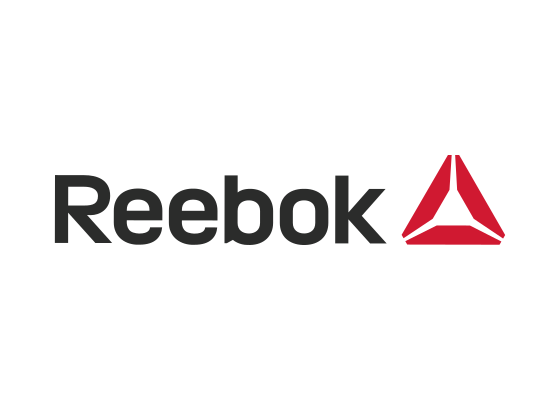
The Reebok logo features the Vector symbol, three diagonal slashes ascending from left to right, representing movement, change, and forward progress in fitness and athletic performance.
The 2020 redesign marked a return to Reebok’s Vector heritage after nearly a decade of using the Delta triangle symbol. Designer Darrin Crescenzi collaborated with Reebok’s in-house team to refine the original 1992 Vector into a cleaner, more contemporary form. The three diagonal stripes create a sense of upward momentum while maintaining simplicity that works across diverse applications from embroidery to digital screens.
The wordmark employs a straightforward sans-serif typeface that balances strength with approachability. Unlike competitors who favor aggressive or technical letterforms, Reebok’s typography projects confidence without intimidation, reflecting the brand’s pivot from traditional sports to inclusive fitness categories like functional training, yoga, CrossFit, and combat sports. The pairing of the Vector icon with the wordmark creates a modular system that allows either element to stand alone or work in combination depending on context.
Meaning and Symbolism
- Three Diagonal Lines: The Vector represents continuous improvement and upward trajectory, suggesting that fitness is a journey of incremental progress rather than static achievement.
- Ascending Orientation: The left-to-right, bottom-to-top movement creates visual dynamism that evokes physical exertion and personal growth.
- Simplicity: The stripped-down geometry ensures the logo reads clearly on technical fabrics, footwear, and small-scale applications where detail would be lost.
- Heritage Revival: Returning to the Vector after years of using the Delta symbol reconnects the brand to its 1990s peak while signaling a fresh direction under new creative leadership.
Design and History
Founded in 1895 as J.W. Foster and Sons in England, the company rebranded as Reebok in 1958, taking its name from the rhebok, an African antelope species known for speed and grace. After Adidas acquired Reebok in 2005, the brand struggled to define a distinct identity separate from its parent company’s traditional sports focus.
The original Vector logo debuted in 1992 during Reebok’s golden era, when the brand competed directly with Nike for basketball and fitness market dominance. In 2011, Reebok introduced the Delta triangle logo as part of a repositioning toward functional fitness, particularly CrossFit and UFC sponsorships. While the Delta communicated change and transformation, it lacked the immediate recognition of the Vector.
The 2020 return to the Vector represented strategic clarity. Rather than create something entirely new, Crescenzi refined the classic mark with subtler angles and more precise geometry. This evolution acknowledged Reebok’s heritage while modernizing the execution for contemporary production methods. The updated Vector appears sharper and more confident, abandoning the Delta’s experimental positioning for proven equity.
Typography
The Reebok wordmark uses a clean, medium-weight sans-serif with slightly condensed proportions that maximize horizontal space efficiency. The letters maintain consistent stroke width and generous spacing, creating excellent legibility across scales. The straightforward typographic approach contrasts with the dynamic Vector icon, establishing visual balance between static text and kinetic symbol. Uppercase presentation reinforces brand authority while avoiding the aggressive styling common in performance sportswear.
FAQ
Q: Why did Reebok switch from the Delta back to the Vector?
A: After nearly a decade using the Delta triangle introduced in 2011, Reebok returned to the Vector in 2020 to reconnect with brand heritage from its 1990s peak. The Vector offered stronger consumer recognition and clearer differentiation in a crowded fitness market.
Q: What does the Vector symbol represent?
A: The three ascending diagonal lines symbolize change, progress, and forward movement. They suggest the continuous improvement central to fitness culture, where growth comes through consistent effort rather than instant results.
Q: Does Reebok still use the Delta logo?
A: Yes, the Delta continues to appear on select products, particularly CrossFit and UFC collaborations where the triangle’s association with transformation remains relevant. The Vector serves as the primary brand identifier across most categories.
More logos with similar colors