Roku’s distinctive purple wordmark signals the brand’s position as the streaming platform that democratized internet TV, transforming televisions into connected entertainment hubs with its streaming devices, software platform, and advertising business that now reaches over 80 million active accounts.
Meaning and Symbolism
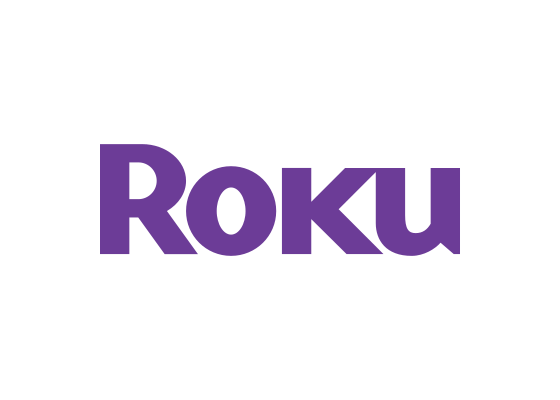
- Rich purple (#6c3c97) differentiates Roku in the black-and-gray electronics market, creating memorable brand recognition in a category dominated by tech giants like Amazon, Apple, and Google
- Bold, rounded letterforms convey friendliness and accessibility, positioning Roku as the user-friendly alternative to complex smart TV interfaces and cable subscriptions
- Lowercase treatment suggests approachability and simplicity, reinforcing the brand’s mission to make streaming television easy for mainstream consumers
- The name “Roku” (Japanese for “six,” referencing founder Anthony Wood’s sixth startup) connects to the brand’s roots while remaining simple to pronounce globally
- Purple’s association with creativity and innovation positions Roku as a platform that unlocks diverse content rather than a hardware commodity
History and Evolution
Roku was founded in October 2002 by Anthony Wood, a Silicon Valley entrepreneur who had previously invented the DVR and founded ReplayTV. The company initially developed set-top boxes for Netflix’s streaming service. In 2007, Netflix decided not to enter the hardware business directly, allowing Wood to launch Roku as an independent company. The first Roku player launched in May 2008, offering Netflix streaming for $99 at a time when few consumers had discovered internet television.
Roku’s timing proved prescient. As broadband speeds increased and streaming content proliferated, Roku positioned itself as the neutral platform carrying all major services, contrasting with Apple TV’s iTunes-centric approach or Amazon Fire TV’s Prime Video emphasis. The company expanded from streaming boxes to streaming sticks, smart TVs with built-in Roku software (through partnerships with TCL, Hisense, and others), and premium players supporting 4K and HDR content.
In 2017, Roku went public with a valuation exceeding $1 billion, validating the streaming platform business model. By 2020, Roku had evolved beyond hardware into a major advertising platform, generating more revenue from ads and subscriptions than device sales. The company now operates The Roku Channel, a free ad-supported streaming service, and licenses its operating system to TV manufacturers worldwide, making Roku the leading streaming platform in North America with over 80 million active accounts as of 2024.
Typography and Design
Roku’s wordmark employs a custom, bold sans-serif typeface with rounded terminals that convey warmth and accessibility. The lowercase treatment reduces formality, positioning the brand as a friendly technology enabler rather than an intimidating tech company. The signature purple creates instant differentiation on retail shelves crowded with black electronics from Samsung, Sony, and LG. Roku’s simple, memorable logo translates effectively across physical devices, packaging, on-screen interfaces, and mobile apps. The brand identity emphasizes simplicity and ease of use, reflecting Roku’s core value proposition: making streaming television accessible to everyone, regardless of technical expertise.
Frequently Asked Questions
Who designed the Roku logo? The Roku logo was developed internally or through a design partner during the company’s early years, with the distinctive purple color and friendly typography reflecting founder Anthony Wood’s vision of accessible streaming technology for mainstream consumers.
When was the Roku logo last updated? Roku has maintained its purple wordmark with minimal changes since the company’s 2008 launch, demonstrating brand consistency and recognition as the company evolved from hardware startup to major advertising platform.
What do the colors in the Roku logo represent? The rich purple (#6c3c97) represents creativity, innovation, and differentiation in the electronics market, helping Roku stand out from black-and-gray competitors while conveying the entertainment value and content diversity available through the platform.