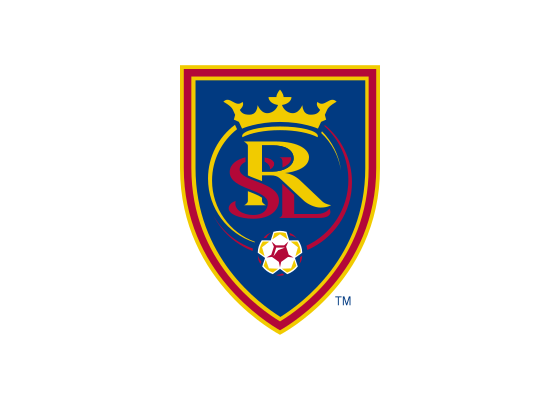
The Real Salt Lake logo adapts European football aesthetics for the American West through a crowned badge that honors Spanish soccer traditions while incorporating Utah-specific symbolism. The 2010 design balances continental credibility with regional authenticity, creating one of MLS’s most internationally-minded identities.
The shield badge features a crown positioned above an intricate design that incorporates both the “RSL” monogram and geometric patterns suggesting Utah’s distinctive landscape. The use of “Real” in the club name references Spanish football tradition, where the term denotes royal patronage, though adapted here as an aspirational positioning statement. The royal blue and claret palette creates sophisticated European feel while the gold accents add both regal quality and connection to Utah’s sunset landscapes. The crown element reinforces the “Real” designation while suggesting championship ambition.
The logo demonstrates sophisticated cultural adaptation, borrowing prestige from European football while creating something distinctly appropriate for Utah. The geometric patterns within the shield suggest both Spanish tilework and Utah’s red rock formations, creating layered meaning that works across cultures. This approach positions RSL as internationally credible while maintaining enough regional specificity to resonate with local supporters who might otherwise resist borrowed European aesthetics.
Meaning and Symbolism
- The crown references “Real” designation and Spanish football tradition while suggesting championship aspiration
- Royal blue creates European football credibility and provides sophisticated grounding
- Claret adds distinction and connects to traditional football club colors
- Gold communicates both regal quality and Utah’s distinctive landscape light
- Geometric patterns suggest Spanish design tradition while evoking Utah’s red rock formations
Design and History
The 2010 logo refresh coincided with RSL’s rise to prominence following their 2009 MLS Cup victory, requiring an identity that could support the club’s growing ambitions while honoring the “Real” designation that had proven controversial when introduced in 2005. The design team faced the challenge of making European-inspired branding feel authentic in the American West, particularly in Utah where Spanish colonial heritage is less prominent than in other southwestern markets.
The refined execution balanced multiple constituencies: supporters who appreciated the European aspirations, critics who found the “Real” designation pretentious, and potential fans unfamiliar with soccer’s global culture. The geometric patterns proved crucial in this balance, providing visual interest that could be interpreted through both European and Utah lenses. The sophisticated palette elevated the brand beyond typical American sports aesthetics while the crown and “Real” elements established clear positioning within global football culture.
Typography
The Real Salt Lake wordmark employs elegant, refined letterforms with European proportions that complement the logo’s continental aspirations. The typography maintains excellent legibility while projecting the sophistication and international credibility central to the “Real” positioning, creating cohesion with the crowned badge aesthetic.
FAQ
Q: Why is the team called “Real” Salt Lake? A: “Real” references Spanish football tradition, where the term denotes royal patronage. While adapted here as aspirational positioning rather than actual royal connection, it signals the club’s ambitions to compete at international standards.
Q: How does the logo balance European and Utah identity? A: The crown and “Real” designation establish European football credibility, while geometric patterns and the gold palette reference Utah’s distinctive landscape. This layered approach creates authenticity across multiple cultural contexts.
Q: Was the “Real” designation controversial? A: The 2005 introduction of “Real” sparked debate about appropriateness in American soccer. The 2010 logo refresh addressed criticism by strengthening regional connections while maintaining continental aspirations, demonstrating how design can help legitimize controversial branding decisions.
More logos with similar colors