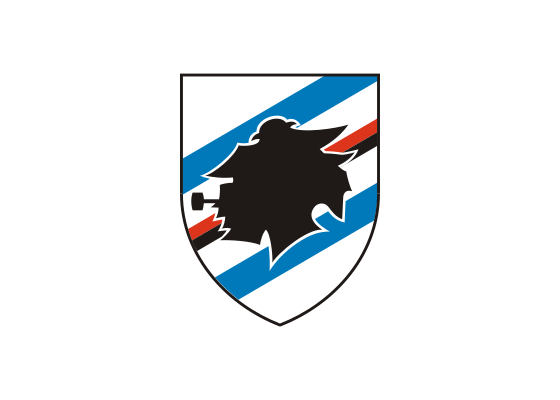
The Sampdoria logo represents one of Italian football’s most distinctive identities, created through a 1946 merger. The shield features the iconic Baciccia sailor silhouette against horizontal bands of blue, white, red, and black, creating the unique blucerchiati design recognized worldwide.
The Sampdoria badge employs a shield format that incorporates one of football’s most recognizable graphic elements. The central figure depicts a stylized sailor, known as Baciccia (a Genoese nickname for Giovanni Battista), rendered in simple silhouette against horizontal color bands. These bands combine blue, white, red, and black in a distinctive pattern that reflects the merger of two predecessor clubs: Sampierdarenese (white, red, and black) and Andrea Doria (blue and white). The composition creates immediate recognition through bold color blocking and iconic imagery. The overall design balances playful character illustration with heraldic structure, creating a badge that feels both traditional and distinctive.
The color palette tells the story of Sampdoria’s formation through visual merger. The blue and white reference Andrea Doria’s maritime heritage, while the red and black represent Sampierdarenese’s industrial roots. Together, these bands create the blucerchiati (blue-ringed) identity that defines the club. The white sections provide breathing room and ensure legibility, while the contrasting colors create strong visual impact. This color strategy is unusual in Italian football, where most clubs use simpler two or three-color schemes, making Sampdoria’s four-color approach distinctively memorable.
Meaning and Symbolism
- Baciccia sailor celebrates Genoa’s maritime heritage and creates friendly, approachable club identity
- Horizontal bands visually represent the merger of two clubs through combined color schemes
- Blue and white reference Andrea Doria’s maritime tradition and Genoa’s seafaring history
- Red and black represent Sampierdarenese’s colors and industrial working-class roots
- Shield format provides traditional heraldic structure while hosting unique graphic elements
Design and History
Sampdoria’s logo originated with the 1946 merger that created the club from Sampierdarenese and Andrea Doria. The decision to combine both clubs’ colors rather than choosing one set demonstrated respect for both traditions while creating something new. The Baciccia sailor figure emerged as the perfect symbol for this union, celebrating Genoa’s maritime identity while providing a friendly, memorable mascot. This figure has remained remarkably consistent across decades, becoming one of Italian football’s most enduring visual elements.
The club’s glory years came in the early 1990s when Sampdoria won their only Scudetto in 1991 and reached the European Cup final in 1992. The badge worn during these triumphs featured the same essential elements, forever linking Baciccia and the distinctive bands to the club’s greatest achievements. The sailor silhouette transcended sport, appearing on merchandise worn throughout Genoa as a symbol of local pride. This period established Sampdoria as a club that could compete with Italy’s traditional powerhouses despite representing only half of Genoa’s football community.
Recent years have seen refinements to improve reproduction quality while maintaining the iconic elements supporters treasure. The sailor silhouette has been subtly simplified for cleaner rendering across digital platforms, but remains immediately recognizable. The horizontal bands have been standardized for consistent color representation across different media. These updates demonstrate how classic design can be modernized without sacrificing character, allowing Sampdoria’s badge to remain relevant while respecting its heritage.
Typography
When the Sampdoria wordmark appears alongside the badge, it typically uses bold, confident letterforms that complement the graphic simplicity of the sailor illustration. The typography maintains clean lines and substantial weight, ensuring legibility while conveying strength. The overall typographic approach avoids decorative excess, allowing the distinctive Baciccia figure and color bands to serve as the identity’s primary visual interest. This restraint creates balance between text and imagery.
FAQ
Q: Who is the sailor on Sampdoria’s logo?
A: The sailor, known as Baciccia (a Genoese nickname for Giovanni Battista), represents Genoa’s maritime heritage. This friendly figure has appeared on Sampdoria’s badge since the club’s 1946 founding, becoming one of Italian football’s most recognizable mascots. The silhouette celebrates the city’s seafaring tradition.
Q: What does blucerchiati mean?
A: Blucerchiati means “blue-ringed” in Italian, referring to Sampdoria’s distinctive kit design with horizontal blue, white, red, and black bands. This nickname derives from the unique pattern created when the two founding clubs’ colors were combined. The term immediately identifies Sampdoria supporters and distinguishes them from rivals.
Q: Why does Sampdoria’s logo have four colors?
A: The four colors represent the merger of two clubs in 1946. Blue and white came from Andrea Doria, while red and black came from Sampierdarenese. Rather than abandoning either tradition, Sampdoria combined all four colors into horizontal bands, creating one of Italian football’s most distinctive visual identities.
More logos with similar colors