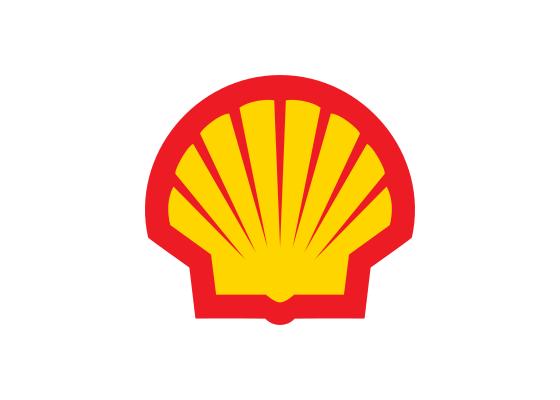
The Shell logo is one of the most recognizable symbols in global commerce, a stylized scallop shell rendered in bright yellow (#FFD500) with a bold red outline (#ED1C24). Designed by Raymond Loewy in 1971, the mark is a masterclass in simplification and brand equity, a logo so iconic that Shell has operated without a wordmark in most contexts for over 50 years.
The Shell logo’s strength is its instant recognizability. The scallop shape is distinctive, the color combination is striking, and the mark works at any scale from a service station sign visible at highway speeds to a corporate letterhead. The red and yellow palette, inspired by the Spanish flag, pays tribute to California, where Shell first expanded into the United States market. The symmetry of the scallop creates balance and visual harmony, while the bold outline ensures legibility even when reproduced at small sizes or in challenging lighting conditions.
Shell operates in more than 70 countries and sells fuel at over 40,000 service stations worldwide. The logo appears on tanker ships, refinery towers, Formula One racing cars, and convenience store awnings. It is a visual identity built for global reach and industrial scale, optimized for the physical world of highway signage, truck livery, and storefront visibility. Unlike tech brands that live primarily on screens, Shell’s logo was designed to be seen from a moving vehicle at 70 miles per hour, and it succeeds brilliantly at that task.
Meaning and Symbolism
- Scallop shell: References the company’s origins when founder Marcus Samuel imported decorative seashells for Victorian-era collectors. The scallop replaced an earlier mussel design in 1904 for its more visually distinctive shape.
- Red outline (#ED1C24): Creates contrast and ensures the logo reads clearly against any background. The red is bold and confident, appropriate for a company operating at the scale of global energy infrastructure.
- Yellow fill (#FFD500): Bright, warm, and optimistic. The yellow creates immediate visual impact and differentiates Shell from competitors using blue (BP), green (BP’s later rebrand), or red and white (Texaco, Mobil).
- Symmetry: The scallop’s bilateral symmetry creates a sense of stability and balance, reinforcing trust and reliability for a brand that powers transportation and industry.
Design and History
1900: Marcus Samuel merged his trading company with the Royal Dutch Petroleum Company, creating Royal Dutch Shell. The name “Shell” came from the family business importing decorative seashells from the Far East. The first logo featured a realistic mussel shell.
1904: The mussel was replaced by a scallop shell, which offered a more distinctive silhouette. Early versions were realistic illustrations with shading and detail.
1948: The shell was simplified into a flat, graphic mark. The red and yellow color scheme, inspired by the Spanish flag and California’s heritage, was standardized. This version reduced visual detail to improve reproduction at service stations.
1971: Raymond Loewy redesigned the logo, creating the version still in use today. Loewy stripped away remaining detail, increased the boldness of the red outline, and optimized the proportions for maximum legibility. The wordmark “SHELL” was removed from most applications, leaving the symbol to stand alone. This was a radical move in 1971, trusting that the shell had achieved sufficient recognition to function without text.
1995: Minor color adjustments refined the red and yellow to their current specifications. The shape remained unchanged, a testament to Loewy’s design achieving near-perfect resolution on the first attempt.
The Shell logo is remarkable for its consistency. While competitors like BP, Chevron, and Texaco have undergone complete rebrands, Shell has maintained the same basic mark since 1971. The decision to operate without a wordmark was bold but justified. The scallop shell became so deeply embedded in the public consciousness that adding the word “SHELL” would have been redundant. Service stations, advertisements, and corporate communications rely on the symbol alone, and it communicates instantly across languages and cultures.
Typography
When Shell does use typography, the wordmark “SHELL” typically appears in a bold, geometric sans-serif in all caps. The letterforms are straightforward and functional, designed to complement the logo without competing for attention. For corporate communications, Shell uses a proprietary typeface system that maintains consistency across global operations. The emphasis is always on the scallop symbol, with typography serving a supporting role.
FAQ
Q: Who designed the current Shell logo?
A: Raymond Loewy, one of the most influential industrial designers of the 20th century, redesigned the Shell logo in 1971. His version has remained essentially unchanged for over 50 years.
Q: Why did Shell choose a scallop shell as its logo?
A: The name “Shell” came from founder Marcus Samuel’s family business importing decorative seashells. The scallop was chosen in 1904 for its distinctive, recognizable shape, replacing an earlier mussel design.
Q: Why are the Shell colors red and yellow?
A: The red and yellow were inspired by the Spanish flag, chosen to honor California’s Spanish heritage when Shell expanded into the United States market in the early 20th century.
More logos with similar colors