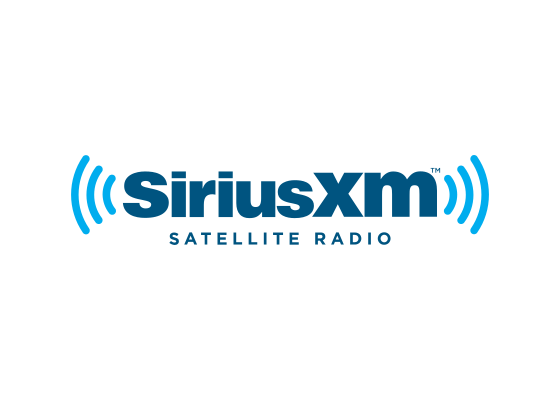
The SiriusXM logo features a bold wordmark combining two brand names in deep blue (#005480) with a bright cyan accent (#00adee), communicating satellite radio’s technological innovation and premium audio entertainment.
The horizontal lockup unites “Sirius” and “XM” into a single cohesive wordmark with custom letterforms that emphasize both components equally. The design evolved from the 2008 merger of rival satellite radio companies Sirius and XM, requiring a visual identity that honored both legacy brands while signaling a unified future. The two-tone blue palette suggests broadcast waves, satellite technology, and the sky — literal references to the orbital infrastructure delivering content to subscribers.
Distinctive circular elements and curved strokes in certain letters subtly reference satellite dishes and radio waves. The XM portion often features slightly different treatment or color to maintain its identity within the combined mark. This careful balance prevents either heritage brand from dominating visually while creating a singular, memorable mark that works across automotive dashboards, mobile apps, and physical receivers.
Meaning and Symbolism
- Dual-Name Integration: Reflects the 2008 merger of two competing satellite radio pioneers, maintaining brand equity from both Sirius and XM legacy subscribers.
- Blue Palette: Suggests sky, space, satellite technology, and premium quality — differentiating subscription satellite radio from free terrestrial broadcasts.
- Circular Forms: Reference satellite dishes, orbital paths, and radio waves transmitting coast-to-coast coverage from space.
- Horizontal Extension: Conveys reach, breadth of content, and the spectrum of channels available across music, sports, talk, and comedy formats.
Design and History
Sirius Satellite Radio and XM Satellite Radio competed fiercely throughout the early 2000s before regulatory approval allowed their 2008 merger, valued at $3.3 billion. The combined company needed a logo that acknowledged both brands’ loyal audiences while projecting strength as the monopoly satellite radio provider in the United States.
Early SiriusXM branding experimented with maintaining separate Sirius and XM visual identities for different services and hardware. Over time, the unified lockup became standard across all touchpoints, from automotive installations to mobile applications. The design prioritized functionality — the mark needed legibility on small car dashboard displays, physical receiver screens, and digital interfaces simultaneously.
As SiriusXM expanded beyond satellite into streaming (acquiring Pandora in 2019), the logo required flexibility to represent a broader audio entertainment platform rather than just satellite-delivered radio. Subtle refinements maintained the core wordmark while optimizing for digital platforms and connected vehicles where subscribers increasingly access content.
Typography
The SiriusXM wordmark employs a custom sans-serif typeface with geometric foundations and distinctive character treatments. The letterforms feature slightly condensed proportions to accommodate the lengthy combined name within compact spaces. Rounded details and subtle curves soften the technical appearance, making the mark feel approachable rather than overly corporate. The design balances modernity with durability — it needed to work for years across physical hardware (car receivers) and evolving digital interfaces without appearing dated.
FAQ
Q: Why does the SiriusXM logo include both names?
A: The logo reflects the 2008 merger of Sirius Satellite Radio and XM Satellite Radio, two formerly competing companies. Including both names preserved brand equity and subscriber loyalty from each legacy service.
Q: Has the SiriusXM logo changed since the merger?
A: The core concept of combining both brand names has remained consistent since 2008, though refinements for digital platforms and streaming services have occurred as the company expanded beyond satellite-only delivery.
Q: What do the blue colors in the SiriusXM logo represent?
A: The blue palette references satellite technology, sky, space, and premium quality — distinguishing subscription satellite radio from free terrestrial broadcasts while suggesting nationwide coverage from orbital infrastructure.