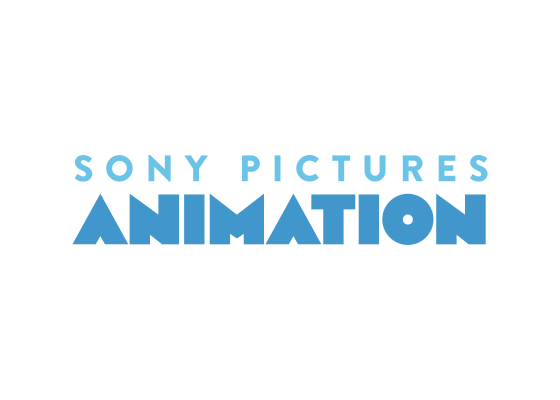
Sony Pictures Animation uses a gradient blue wordmark that positions the studio as a modern competitor to Pixar and DreamWorks, producing computer-animated films distributed worldwide by Sony Pictures Releasing under the Columbia Pictures label.
Meaning and Symbolism
- The bright blue color palette conveys creativity, imagination, and the limitless possibilities of animation
- The gradient treatment suggests depth, dimension, and the technical sophistication of CGI filmmaking
- The clean typography reflects modern animation’s focus on crisp digital rendering rather than hand-drawn aesthetics
- The lighter blue tones evoke sky, optimism, and family-friendly content appropriate for animated features
- The absence of playful embellishment distinguishes Sony Pictures Animation as a serious studio competitor
History and Evolution
Sony Pictures Animation was founded on May 9, 2002, as Sony’s answer to the computer animation revolution led by Pixar and DreamWorks. The studio emerged during a period when traditional 2D animation was declining and studios were racing to establish CGI capabilities. Sony Pictures Animation’s first feature, Open Season, was released on September 29, 2006, following four years of production infrastructure development. The film earned $197 million worldwide on an $85 million budget, proving the studio viable.
The studio achieved its biggest commercial success with the Hotel Transylvania franchise, which has grossed over $1.3 billion worldwide across four films (2012-2022). The Smurfs films and Cloudy with a Chance of Meatballs franchise also became significant properties. In 2018, Spider-Man: Into the Spider-Verse won the Academy Award for Best Animated Feature, representing a creative breakthrough with its comic book-inspired visual style that blended 2D and 3D techniques. The film’s critical and commercial success positioned Sony Pictures Animation as an innovator rather than a Pixar imitator.
The studio underwent a significant brand refresh around 2018, updating its logo to the current gradient blue wordmark that reflects a more contemporary, streamlined identity. This coincided with increased creative ambition under producer Phil Lord and Christopher Miller’s influence. Recent releases include The Mitchells vs. the Machines (2021) and Spider-Man: Across the Spider-Verse (2023), which further established the studio’s reputation for distinctive visual storytelling.
Typography and Design
The Sony Pictures Animation wordmark employs a geometric sans-serif typeface with consistent stroke weights that convey modernity and technical precision. The letterforms are clean and legible, ensuring the brand reads clearly across digital platforms, theatrical posters, and home video packaging. The gradient blue treatment adds visual interest while maintaining professional sophistication.
The color system uses two blues (#4197cb and #6bc4e8) that create a smooth gradient suggesting movement, transformation, and the magic of animation. This approach differentiates the studio from Pixar’s white lamp and red ball, DreamWorks’ fishing boy on moon, and Disney’s castle iconography by using typography itself as the primary brand element. The design reflects Sony’s broader corporate aesthetic while establishing a distinct identity within the crowded animation marketplace. The logo adapts well to various media, maintaining legibility at small sizes and making a strong impact on theatrical one-sheets.
Frequently Asked Questions
Who designed the Sony Pictures Animation logo? The 2018 logo refresh was developed in collaboration with Sony’s in-house branding teams and external design consultants to modernize the studio’s visual identity.
When was the Sony Pictures Animation logo last updated? The current gradient blue wordmark was introduced in 2018 as part of a broader brand evolution following the success of Spider-Man: Into the Spider-Verse.
What do the colors in the Sony Pictures Animation logo represent? The blue gradient represents creativity, imagination, and technical innovation, while conveying the family-friendly, optimistic nature of the studio’s animated content.