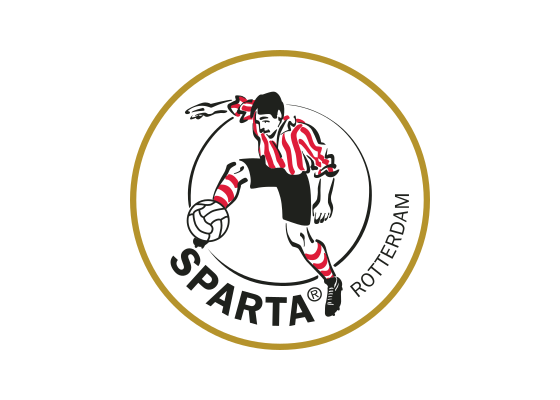
The Sparta Rotterdam logo honors the oldest professional football club in the Netherlands, founded April 1, 1888. The circular badge combines red and white with gold accents, representing 135 years of Rotterdam football heritage and six Eredivisie championships.
Sparta Rotterdam’s identity carries the weight of being Dutch football’s oldest professional club, predating even Ajax by two years. The circular badge format reflects traditional European football crest design, appropriate for a club with such deep historical roots. The red and white color scheme, enhanced by gold accents that reference the club’s six Eredivisie titles and long heritage, creates a distinguished identity that balances tradition with contemporary functionality.
The badge’s circular structure provides timeless appeal while working effectively across modern applications. Playing at Het Kasteel (The Castle), Sparta’s historic stadium, the club needed an identity that could honor its founding era while functioning on digital platforms, broadcast graphics, and contemporary merchandise. The gold accents elevate the mark beyond standard red and white, suggesting the prestige appropriate for Dutch football’s founding club despite Sparta’s modest position compared to Ajax, PSV, and Feyenoord.
Meaning and Symbolism
- April 1, 1888 founding makes Sparta the Netherlands’ oldest professional football club, predating all Eredivisie competitors
- Circular badge format honors late 19th-century European football tradition while maintaining contemporary versatility
- Red and white palette creates classic football colors appropriate for a club with 135 years of history
- Gold accents reference six Eredivisie championships and the prestige of being Dutch football’s founding professional club
- Het Kasteel connection to the historic stadium that reinforces Sparta’s traditional character and Rotterdam roots
Design and History
Sparta Rotterdam’s visual identity evolved from Victorian-era origins through various iterations while maintaining core red and white colors and circular structure. As the oldest professional club, Sparta carries unique historical significance in Dutch football, though the club’s achievements have been overshadowed by Ajax’s dominance and PSV and Feyenoord’s sustained success. The badge honors this pioneer status through traditional design elements enhanced by gold accents.
The six Eredivisie titles, all won before World War II, represent an era when Sparta competed as one of Dutch football’s elite clubs. While the club has spent periods in the Eerste Divisie (second tier) in recent decades, including earning promotion back to the Eredivisie in 2018-19, the badge maintains the dignity appropriate for the nation’s founding professional club. The circular format and gold accents ensure Sparta projects historical authority even when competing against wealthier clubs.
Playing at Het Kasteel since 1916 gives Sparta one of Dutch football’s most characterful stadiums. The intimate 11,000-capacity ground reflects the club’s traditional character, standing in contrast to the larger, more modern venues of Ajax, PSV, and Feyenoord. The badge needed to work within this historic context while remaining functional for contemporary branding needs, a balance achieved through classic circular structure with refined execution.
Typography
Typography in the Sparta Rotterdam badge uses traditional, serif-influenced letterforms that reference the club’s Victorian-era foundation. The letters maintain readability while conveying heritage and dignity appropriate for Dutch football’s oldest professional club. The type treatment complements the circular composition and gold accents, creating a unified system that projects both history and contemporary professionalism.
FAQ
Q: Why is Sparta Rotterdam significant despite not being one of the big three? A: Sparta Rotterdam holds unique status as the Netherlands’ oldest professional football club, founded April 1, 1888, predating Ajax, PSV, and Feyenoord. The club won six Eredivisie titles in the pre-war era and represents Rotterdam football heritage alongside Feyenoord and Excelsior. This founding status creates historical importance that transcends current league position.
Q: What do the gold accents in the badge represent? A: The gold accents reference Sparta’s six Eredivisie championships and the prestige of being Dutch football’s founding professional club. These metallic tones elevate the badge beyond standard red and white, suggesting the historical importance and dignity appropriate for a club with 135 years of heritage, even during periods of second-tier competition.
Q: How does Het Kasteel reflect Sparta’s identity? A: Het Kasteel (The Castle), Sparta’s home since 1916, is one of Dutch football’s most traditional stadiums with its 11,000 capacity and intimate atmosphere. The historic venue reinforces the club’s character as Dutch football’s founding professional club, standing in atmospheric contrast to the larger, more modern stadiums of Ajax, PSV, and Feyenoord. The badge’s classic circular design reflects this traditional setting.
More logos with similar colors