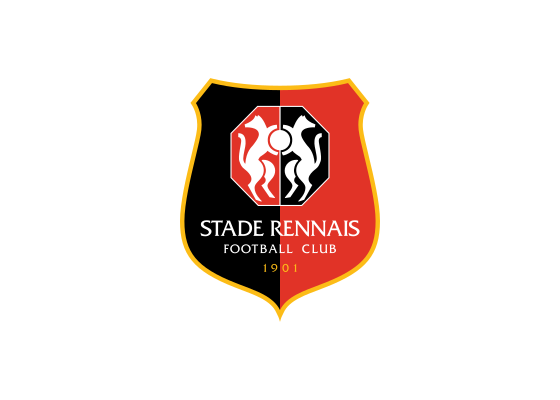
The Stade Rennais logo combines bold red and gold in a shield format that reflects both Breton regional pride and the club’s status as one of French football’s founding institutions, established in 1901.
The red and gold color scheme creates a warm, assertive presence that distinguishes Rennes from clubs using cooler blue-based palettes or standard tricolor schemes. The shield structure provides traditional football authority while allowing flexible composition that works across contemporary applications. The combination of bright red with golden yellow produces high contrast that ensures visibility in broadcast environments and creates immediate recognition among the dozens of club crests that appear in Ligue 1 coverage.
What makes this identity particularly effective is how it balances regional Breton identity with national-level ambitions. As one of the founding members of the first division of French football, Rennes needed a mark that communicated institutional gravitas while remaining visually approachable for contemporary audiences. The shield format accomplishes both goals, offering historical resonance without feeling overly conservative or dated. The color treatment keeps the mark feeling energetic and modern despite the traditional structural framework.
Meaning and Symbolism
- Red and gold palette creates distinctive warm color signature that separates Rennes from blue-dominated French football landscape
- Shield form honors club’s status as founding member of French first division dating to 1901
- Bold color contrast ensures broadcast visibility and creates immediate recognition across platforms
- Breton regional identity connects to fierce local pride while maintaining appeal for national and international audiences
- Balanced proportions accommodate sponsor integration and maintain clarity from jersey applications to stadium displays
Design and History
Founded in 1901 as Stade Rennais, the club represents one of the oldest continuously operating professional football organizations in France. After winning the Coupe de France in 1971, the club evolved its name to the current Stade Rennais FC version, marking a modernization phase while maintaining core visual identity elements. The logo has undergone refinements throughout this history, but the red and gold color foundation has remained remarkably consistent.
Rennes plays at Roazhon Park and competes in the fierce Derby Breton against Nantes, one of French football’s most significant regional rivalries. The logo serves as rallying symbol for this competition, appearing on banners, scarves, and tifos that create intense atmosphere during these matches. The distinct color scheme prevents any confusion between the clubs while reinforcing the geographic and cultural divisions that make the rivalry meaningful to supporters.
The club’s best league finish came in the 2019-20 season when they placed third after the campaign ended prematurely. That same season, Rennes won their third Coupe de France title, joining victories from 1965 and 1971. The modern iteration of the logo appeared on championship materials and continental competition broadcasts, giving the mark international visibility and associating it with competitive success rather than mid-table obscurity.
Typography
The Stade Rennais wordmark employs bold, condensed letterforms that maximize impact within the shield’s constrained space. The typeface balances traditional sporting aesthetic with contemporary clarity, ensuring the club name remains legible across all scales and reproduction contexts. The typographic approach prioritizes functionality, allowing the mark to work effectively whether embroidered on jerseys, printed on tickets, or displayed on high-resolution digital screens.
FAQ
Q: When did Stade Rennais change its name from the original founding? A: The club was founded as Stade Rennais in 1901 and adopted the current Stade Rennais FC name after winning the Coupe de France in 1971, marking an evolution in the club’s identity and ambitions.
Q: What is the Derby Breton? A: The Derby Breton is the fierce rivalry between Stade Rennais and Nantes, the two top football clubs in the Brittany region, representing one of French football’s most passionate and historically significant regional competitions.
Q: What is Rennes’ best finish in Ligue 1? A: Rennes’ best league performance came in the 2019-20 season when they finished third after the campaign ended prematurely, representing the club’s highest position in the French football league system.
More logos with similar colors