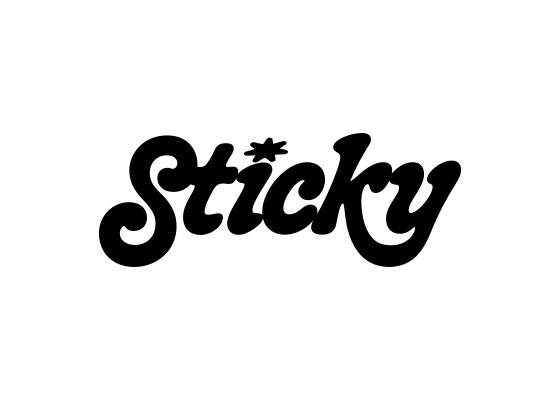
Sticky Glass’s bold black wordmark represents the Brooklyn-based design company founded by Grace Whiteside, renowned for hand-blown glasswork created by a diverse team of LGBTQ+, POC, and female-identifying artisans.
Meaning and Symbolism
- Black conveys sophistication, artistic authority, and the high-end design sensibility that defines Sticky Glass’s aesthetic.
- The bold typography reflects the confidence and clarity of handcrafted glasswork that serves both functional and artistic purposes.
- Simplicity in the logo mirrors the clean lines and intentional design of the glass pieces themselves.
- Black’s timelessness suggests lasting value and the permanence of artisanal craftsmanship versus mass production.
- The straightforward wordmark emphasizes the product quality and maker identity over decorative branding.
History and Evolution
Sticky Glass was founded by Grace Whiteside in New York, establishing its Brooklyn workshop as a center for innovative, socially conscious glasswork. The company distinguishes itself through collaborative, multi-functional glass designs that challenge traditional boundaries between art, utility, and performance. Each piece is meticulously hand-blown by a diverse team that prioritizes representation and inclusion in an industry historically dominated by specific demographics.
The company’s commitment extends beyond product design to social responsibility. Sticky Glass donates a portion of proceeds to organizations supporting marginalized communities, including trans individuals and immigrant families. The brand also emphasizes sustainability through reused, recycled, and biodegradable packing materials. This intersection of craft excellence, social consciousness, and environmental responsibility has positioned Sticky Glass as a model for values-driven design businesses in the contemporary maker movement.
Typography and Design
The Sticky Glass wordmark employs bold, geometric sans-serif typography that creates immediate visual impact. The thick letterforms suggest the substantial weight and presence of glass objects while maintaining legibility across digital and print applications. Black provides maximum contrast against white backgrounds and photographs of colorful glass pieces. The logo’s simplicity allows the products themselves to take center stage in marketing materials, letting the craftsmanship speak for itself rather than competing with decorative branding elements.
Frequently Asked Questions
Who designed the Sticky Glass logo? The logo was likely developed by founder Grace Whiteside or in collaboration with Brooklyn’s design community, though specific design credits have not been widely published. The aesthetic aligns with Brooklyn’s contemporary maker culture.
When was the Sticky Glass logo last updated? The logo has remained consistent since the company’s founding, prioritizing recognition and brand consistency as Sticky Glass built its reputation in the artisanal glasswork market.
What do the colors in the Sticky Glass logo represent? The black color represents sophistication, artistic authority, timelessness, and the high-end design sensibility that defines Sticky Glass’s approach to functional and performative glasswork.