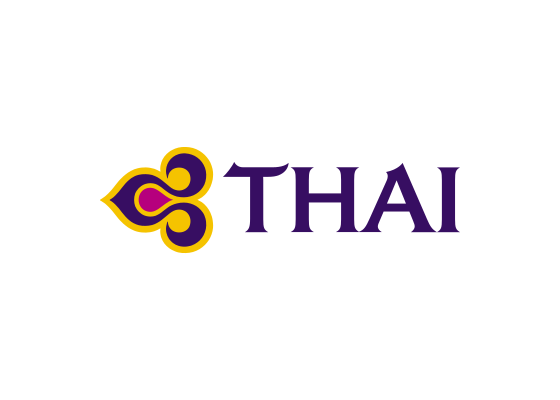
The Thai Airways logo features a striking combination of deep purple (#370e62), vibrant magenta (#b6007d), and golden yellow (#f5c300) that creates one of the most distinctive color palettes in global aviation, reflecting Thai cultural symbolism and royal heritage.
The abstract symbol suggests a stylized orchid or mythical bird, though the airline has never officially confirmed a single interpretation. This ambiguity works in the logo’s favor, allowing viewers from different cultures to find their own meaning while maintaining clear Thai identity. The purple-magenta gradient recalls royal purple used in Thai monarchy, while gold represents Buddhist tradition and prosperity.
Thai Airways formed in 1988 through a merger of Thai Airways Company and Thai Airways International, consolidating the country’s aviation operations. The logo needed to compete with Singapore Airlines, Cathay Pacific, and other premium Asian carriers while maintaining distinctly Thai character. The bold color choice achieved this, creating instant recognition on airport jetways worldwide.
Meaning and Symbolism
- Deep purple (#370e62): References Thai royal purple, connecting the flag carrier to monarchy and national pride while projecting premium positioning.
- Vibrant magenta (#b6007d): Adds energy and movement, creating a gradient effect that suggests tropical sunsets and Thai cultural vibrancy.
- Golden yellow (#f5c300): Represents Buddhist tradition, prosperity, and royal regalia, grounding the identity in Thai cultural heritage.
- Abstract symbol: Allows multiple interpretations (orchid, bird, mythical creature), creating visual intrigue while maintaining unmistakable Thai character.
Design and History
Thai Airways International’s current form dates to 1988, but its roots trace back to 1960 when the airline was jointly owned by the Thai government and Scandinavian Airlines System (SAS). The partnership ended in 1977, leading to full Thai government ownership and eventual merger with domestic carrier Thai Airways Company in 1988.
The purple-magenta-gold identity distinguishes Thai from competitors who lean heavily on red and blue. Singapore Airlines owns the refined blue-and-gold space. Cathay Pacific commands green. Thai Airways needed something equally bold but distinctly different. The purple-magenta gradient was daring for the late 1980s, when most airlines favored single-color identities.
The airline operates from Bangkok’s Suvarnabhumi Airport, designed by architect Helmut Jahn and opened in 2006. The logo’s colors coordinate with the airport’s dramatic purple lighting scheme, creating a cohesive brand experience. Thai Airways faced financial difficulties in the 2010s, entering bankruptcy restructuring in 2020, but the visual identity has remained constant through these turbulent periods.
Typography
Thai Airways pairs its colorful symbol with clean, modern sans-serif typography that provides balance against the logo’s visual intensity. The wordmark uses a geometric typeface with consistent stroke weights, ensuring legibility while avoiding stylistic flourishes that would compete with the symbol. The typography works in both Latin and Thai scripts, maintaining brand consistency across domestic and international markets. The restrained letterforms allow the purple-magenta-gold symbol to dominate, creating a hierarchical balance between color-driven emotion and typographic clarity.
FAQ
Q: What does the Thai Airways symbol represent?
A: The airline has never confirmed a single official interpretation. Viewers commonly see an orchid (Thailand’s national flower), a mythical bird, or an abstract representation of flight. This intentional ambiguity allows multiple cultural interpretations.
Q: Why does Thai Airways use purple instead of red or blue?
A: Purple references Thai royal heritage (royal purple is significant in Thai monarchy), while differentiating the airline from Asian competitors like Singapore Airlines (blue-gold) and Cathay Pacific (green). The bold color choice creates instant recognition.
Q: Is Thai Airways still government-owned?
A: Yes. The Thai government has maintained majority ownership through various corporate restructurings. The airline entered bankruptcy rehabilitation in 2020, with the government remaining the primary stakeholder through the restructuring process.
More logos with similar colors