American Hockey League Logos
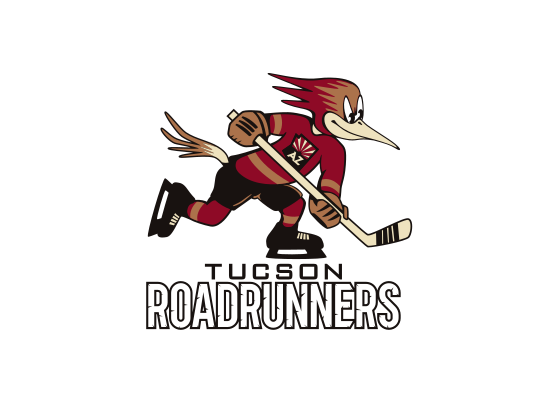
The Tucson Roadrunners logo features a dynamic desert roadrunner bird rendered in burgundy and Sonoran sunset colors, perfectly capturing both the team’s Arizona location and its affiliation with the Arizona Coyotes NHL franchise.
Meaning and Symbolism
- Burgundy red aligns with Arizona Coyotes’ “brick red” team colors while representing the distinctive Arizona desert landscape
- Tan, sand, and warm earth tones evoke the Sonoran Desert surrounding Tucson and Southwest regional character
- The roadrunner bird serves as Arizona’s iconic desert wildlife and symbolizes speed, agility, and territorial determination
- Dynamic, forward-leaning posture communicates explosive skating speed and offensive pressure in AHL competition
- Black accents provide definition and visual strength essential for uniform applications and arena visibility
History and Evolution
The Tucson Roadrunners began play in the American Hockey League for the 2016-17 season when the Arizona Coyotes relocated their AHL affiliate from Springfield, Massachusetts, to Tucson. The move brought professional hockey back to Southern Arizona and created geographic proximity for player call-ups and development oversight. The franchise plays home games at the Tucson Convention Center, a multi-purpose arena in downtown Tucson.
The logo was designed specifically for the Tucson launch, incorporating regional Southwest imagery while maintaining visual connection to parent club Arizona Coyotes. The roadrunner bird choice celebrated Arizona’s most recognizable desert wildlife while differentiating from the coyote imagery that would create confusing brand overlap. The color palette bridges Coyotes’ brick red and black with warm desert tones authentic to Tucson’s unique Sonoran Desert environment. The franchise has maintained consistent branding since launch, focusing on building local fan base and developing prospects for Arizona’s NHL roster. The logo successfully balances AHL affiliate identity requirements with independent team character that resonates with Tucson’s distinct cultural identity separate from Phoenix.
Typography and Design
The Roadrunners wordmark employs an aggressive, angular typeface with sharp serifs and dynamic diagonal stress suggesting speed and forward motion. Letters feature pointed terminals and extended ascenders that echo roadrunner tail feathers and desert plants. The typography uses varied stroke weights that create visual rhythm while maintaining legibility across arena signage and television broadcasts.
The roadrunner icon uses sophisticated color gradation and feather detail to create dimensional realism while maintaining bold silhouette recognition from arena distances. Strategic use of burgundy highlights on key anatomic features draws attention to the bird’s characteristic alert expression and running posture. The warm tan and sand tones provide authentic Sonoran Desert color that differentiates Tucson from typical hockey team palettes dominated by primary colors. The multi-color approach requires careful reproduction management but allows rich regional storytelling impossible with simplified marks. The design works across applications from embroidered jersey crests to large-format convention center graphics and promotional materials targeting families in Tucson’s hockey-curious market.
Frequently Asked Questions
Who designed the Tucson Roadrunners logo? The Roadrunners logo was created by the Arizona Coyotes’ creative department in collaboration with the AHL during the franchise’s 2016 relocation to Tucson, though specific external design agency involvement has not been publicly documented.
When did the Tucson Roadrunners begin play? The Roadrunners debuted in the American Hockey League for the 2016-17 season when the Arizona Coyotes relocated their AHL affiliate from Springfield, Massachusetts, to Tucson.
What do the colors in the Roadrunners logo represent? The burgundy aligns with Arizona Coyotes’ team colors while representing desert landscape, and the tan and sand tones authentically evoke the Sonoran Desert surrounding Tucson, creating distinctive Southwest regional identity.
More logos with similar colors