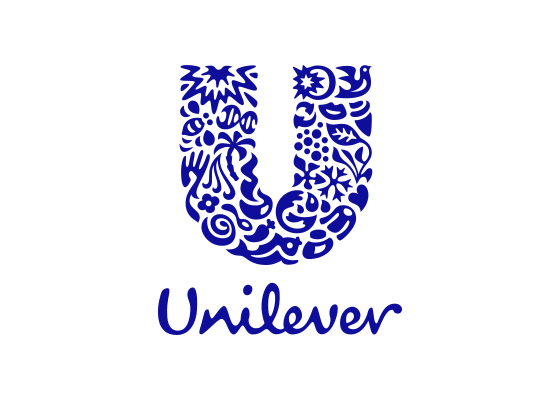
The Unilever logo features a distinctive “U” composed of 25 icons representing the company’s diverse brands, values, and commitment to sustainability across food, beverages, cleaning products, and personal care.
The Unilever mark stands as one of the most complex and meaningful corporate logos, with each icon within the “U” symbolizing specific aspects of the business or brand values. The symbols include representations of lips (beauty), hands (sensitivity and care), a heart (love and health), a flower (fragrance), a bee (pollination and hard work), DNA (bioscience), and numerous others. This rich iconography creates a mark that rewards closer inspection while maintaining clear, recognizable form at distance through the strong “U” shape.
The deep blue conveys trust, professionalism, and heritage appropriate for a company operating since the 1930s. The color suggests stability essential for a corporation managing portfolio brands used daily by billions of consumers worldwide. Blue creates appropriate gravitas for a company headquartered in London and Rotterdam, operating across approximately 190 countries with products ranging from Dove soap to Ben & Jerry’s ice cream to Hellmann’s mayonnaise.
The 2004 redesign by Wolff Olins marked a significant shift from previous corporate identity, moving from straightforward wordmark to symbolically rich brand mark that communicates Unilever’s breadth and values. The complexity reflects the company’s scale and diversity, managing over 400 brands across multiple consumer goods categories. The mark positions Unilever as thoughtful and values-driven rather than simply a massive conglomerate, essential for a corporation increasingly accountable to consumers concerned with sustainability and corporate responsibility.
Meaning and Symbolism
- 25 icons: Each symbol within the “U” represents specific aspects of Unilever’s business, values, or commitments, including ingredients (tea leaf, tomato), sustainability (recycling, sun), care (hands, heart), and beauty (lips, hair). This creates meaning that unfolds with familiarity.
- Deep blue: The color conveys trust, heritage, and professionalism appropriate for a corporation with British-Dutch origins operating globally since the 1930s. Blue creates stability and reliability essential for everyday consumer products.
- Strong “U” form: Despite internal complexity, the mark maintains clear letterform recognizable at distance, ensuring functionality across applications from business cards to building signage. The “U” provides structure organizing the diverse icons.
- Sustainability messaging: Icons including recycling symbols, plants, and sun reference Unilever’s environmental commitments, positioning the corporation as responsible and forward-thinking rather than simply profit-focused. This addresses growing consumer concerns about corporate behavior.
Design and History
Unilever formed in 1929 through merger of British soap maker Lever Brothers and Dutch margarine producer Margarine Unie, creating one of the world’s first true multinational consumer goods corporations. The company expanded throughout the 20th century through acquisitions and organic growth, building portfolio spanning foods, beverages, cleaning products, and personal care. By the 2000s, Unilever managed over 400 brands with collective revenue exceeding $50 billion, operating as one of Europe’s most valuable companies.
The 2004 rebrand by Wolff Olins responded to Unilever’s challenge of maintaining cohesive corporate identity while managing diverse portfolio brands that often compete directly with each other in retail environments. Most consumers interact with Unilever brands like Dove, Axe, Lipton, and Knorr without awareness of the corporate parent. The new logo needed to work primarily in business-to-business contexts, investor relations, and corporate communications rather than consumer advertising.
Wolff Olins developed the icon-filled “U” to communicate Unilever’s breadth and values in ways a simple wordmark couldn’t achieve. Each symbol underwent careful design to work at small sizes within the overall form while maintaining meaning when examined closely. The redesign coincided with Unilever’s increased emphasis on sustainability and corporate responsibility, with many icons specifically referencing environmental commitments. The mark reflects modern corporate identity thinking, where logos must communicate values and purpose rather than simply providing recognition, addressing stakeholders concerned with corporate behavior beyond financial performance.
Typography
The Unilever wordmark below the “U” symbol uses clean, contemporary sans-serif letterforms with consistent stroke weights and balanced proportions. The letters maintain generous spacing and even rhythm, creating professional, accessible impression. The typography avoids decorative elements, instead providing clear, functional communication appropriate for corporate contexts. The lowercase treatment creates friendliness and approachability, contrasting with authoritative capitals common to legacy corporations. The letterforms work well across languages and writing systems, essential for a truly global corporation. The overall typographic approach supports the brand positioning by remaining understated and professional, allowing the symbolically rich “U” to carry meaning while the letters provide clear identification. The combination creates balanced identity appropriate for a corporation operating primarily behind consumer-facing portfolio brands while maintaining presence in business contexts.
FAQ
Q: What do all the icons in the Unilever logo represent?
A: The 25 icons within the “U” symbolize diverse aspects of Unilever’s business and values. Examples include a bee (creation, pollination, hard work), lips (beauty, taste), heart (love, care, health), hand (sensitivity, care, need), DNA (bioscience, genes), recycling symbol (sustainability), and sun (energy, life). Each icon underwent specific design to work within the overall form while maintaining individual meaning. The complete set communicates Unilever’s breadth across food, personal care, and sustainability.
Q: Why doesn’t Unilever prominently display its logo on consumer products?
A: Unilever operates as a portfolio management company, with individual brands like Dove, Axe, Lipton, and Ben & Jerry’s maintaining independent identities and marketing. Most consumers interact with these brands without awareness of the corporate parent. The Unilever logo appears primarily in business contexts, investor relations, corporate communications, and on packaging in small regulatory text. This “house of brands” strategy allows flexibility and prevents corporate association from constraining individual brand positioning.
Q: How did Wolff Olins approach the 2004 Unilever rebrand?
A: Wolff Olins developed the icon-filled “U” to communicate Unilever’s breadth, values, and commitments in ways a simple wordmark couldn’t achieve. The agency conducted extensive research into Unilever’s businesses, heritage, and aspirations, translating findings into 25 specific symbols. Each icon underwent careful design to work at small sizes while maintaining meaning when examined closely. The rebrand positioned Unilever as thoughtful and values-driven, addressing growing stakeholder concerns about corporate responsibility and sustainability.