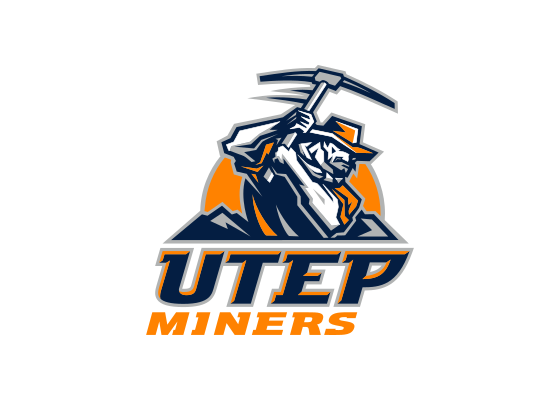
The UTEP Miners logo features the pickaxe-wielding mascot “Paydirt Pete” in orange and blue, representing the University of Texas at El Paso’s proud mining heritage and the program’s historic 1966 NCAA Men’s Basketball Championship, the only Texas school to achieve this distinction.
Meaning and Symbolism
- The navy blue color conveys tradition, strength, and academic excellence while connecting UTEP to the broader University of Texas system
- The bright orange represents the Southwest’s desert landscape, mining heritage, and competitive energy that defines Miners athletics
- The pickaxe and miner imagery honor El Paso’s historical importance in southwestern mining and the region’s working-class identity
- The mascot “Paydirt Pete” embodies determination, hard work, and the grit required to succeed both athletically and academically
- The design celebrates UTEP’s unique cultural position at the U.S.-Mexico border, serving a predominantly Hispanic student population
History and Evolution
The University of Texas at El Paso (originally Texas College of Mines and Metallurgy when founded in 1914) adopted the “Miners” nickname reflecting the region’s mining industry and the school’s original engineering focus. UTEP’s athletic programs have competed since the early 20th century, with the university joining the Western Athletic Conference in 1967 before moving to Conference USA in 2005 alongside Rice, Tulsa, and SMU when several schools departed the WAC.
UTEP achieved its greatest athletic triumph on March 19, 1966, when the Miners men’s basketball team, coached by Don Haskins, defeated the heavily favored Kentucky Wildcats 72-65 to win the NCAA Championship. This historic victory transcended sports: Haskins started five Black players against an all-white Kentucky team in an era when college basketball remained largely segregated, particularly in the South. The “Glory Road” championship, later immortalized in a 2006 film, helped accelerate the integration of college basketball and changed the sport forever. Beyond basketball, UTEP competes across multiple sports at the Division I level. The Miners’ orange and blue colors have remained consistent for decades, with various refinements to Paydirt Pete’s appearance and the athletic mark’s design. The pickaxe symbol has evolved from realistic illustrations to more stylized, modern interpretations suitable for digital applications and athletic uniforms.
Typography and Design
The UTEP Miners wordmark uses bold, collegiate typography that projects strength and tradition. The navy blue (#041e42) and orange (#ff8200) palette creates strong contrast and visibility across all applications from football helmets to basketball courts. Paydirt Pete appears in various configurations, sometimes as a full-body miner wielding a pickaxe, other times as a stylized head or abstract pickaxe symbol. The gray accent color (#b1b3b3) provides additional flexibility for secondary marks and applications. The design system extends across UTEP’s athletic department, creating unified branding while celebrating the university’s unique mining heritage, border location, and historic role in integrating college basketball. The logo works effectively across all media from the Don Haskins Center (named for the legendary coach) to television broadcasts of Conference USA competition.
Frequently Asked Questions
Who designed the UTEP Miners logo? The current Miners branding has evolved through collaboration between UTEP’s athletics department and athletic apparel partners, with various refinements over the decades to modernize Paydirt Pete while preserving the mining heritage and traditional colors.
When was the UTEP Miners logo last updated? UTEP periodically refines its athletic marks and Paydirt Pete’s appearance, with recent updates ensuring consistency across digital platforms while maintaining the traditional orange and blue palette that has defined Miners athletics for decades.
What do the colors in the UTEP Miners logo represent? Navy blue represents tradition, strength, and connection to the University of Texas system, while orange reflects El Paso’s desert landscape, mining heritage, and competitive spirit. Together, they create a distinctive identity celebrating the region’s history and the program’s legendary 1966 championship.
More logos with similar colors