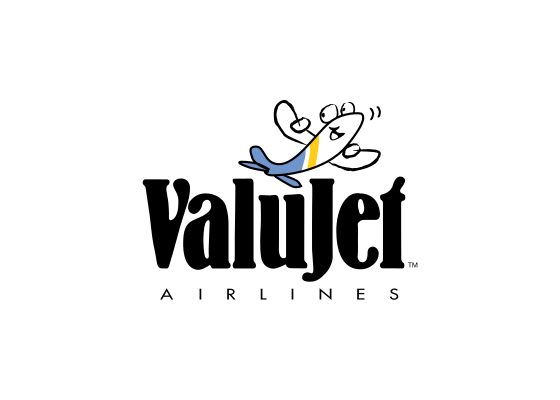
The ValuJet Airlines logo featured a bold yellow and blue color scheme with dynamic diagonal elements, embodying the ultra-low-cost carrier’s aggressive pricing strategy that ultimately prioritized economy over the safety measures that led to its downfall.
Meaning and Symbolism
- Bright yellow communicated value, affordability, and the sunshine destinations ValuJet primarily served in the Eastern United States
- Blue represented aviation, sky, and travel, following standard airline color psychology conventions
- Dynamic diagonal stripes suggested speed and forward momentum appropriate for an aggressively expanding carrier
- The bold, accessible styling reflected discount airline positioning and mass-market appeal for budget-conscious travelers
- High-contrast colors ensured visibility on aircraft livery and airport terminal signage in competitive markets
History and Evolution
ValuJet launched in 1992 as an ultra-low-cost carrier headquartered in Clayton County, Georgia, pioneering aggressive cost-cutting measures that would later prove disastrous. The airline purchased only used aircraft from other carriers, minimized employee training, and relied heavily on contractors for maintenance and ground services. Despite concerning safety indicators including military contract rejections over safety worries and internal FAA concerns about grounding the airline, ValuJet grew rapidly through rock-bottom fares.
The catastrophic crash of Flight 592 in May 1996, caused by illegally stored oxygen generators that triggered an onboard fire, killed all 110 people aboard and effectively destroyed the airline. Investigations revealed ValuJet’s systemic safety failures and reckless cost-cutting culture. The airline was temporarily grounded, and though it resumed limited operations, the brand was irreparably damaged. In 1997, ValuJet acquired the smaller AirTran Airways and adopted the AirTran name to escape the toxic ValuJet association. The logo and brand were permanently retired as the merged airline distanced itself from ValuJet’s reputation for dangerous cost-cutting.
Typography and Design
The ValuJet wordmark employed bold, chunky letters with consistent stroke weights designed for maximum visibility on aircraft fuselages and tail fins. The typography used slightly condensed letterforms to maximize size while maintaining legibility from terminal windows and tarmac distances. The “Jet” portion typically received emphasis through color blocking or positioning, reinforcing the aviation context.
The logo incorporated dynamic diagonal stripes or swooshes that suggested motion and speed, common in 1990s airline branding. The yellow-blue color combination stood out against white aircraft bodies and provided strong contrast for terminal signage in crowded airports. The design prioritized recognition and impact over sophistication, appropriate for an airline competing primarily on price rather than service quality. The bold, straightforward approach reflected ValuJet’s no-frills business model, though the aggressive cost-cutting ethos extended far beyond visual identity into operations with tragic consequences.
Frequently Asked Questions
Who designed the ValuJet Airlines logo? The ValuJet logo was created during the airline’s 1992 launch, likely by an Atlanta-area branding agency, though specific designer credits have not been publicly documented given the brand’s troubled history.
When was the ValuJet logo retired? The ValuJet name and logo were permanently retired in 1997 when the airline merged with AirTran Airways and adopted the AirTran identity to escape the ValuJet brand’s association with the Flight 592 disaster.
What did the colors in the ValuJet logo represent? The yellow symbolized value pricing and sunshine destinations, while blue represented aviation and sky, though the bright, budget-focused palette ultimately came to symbolize the dangerous cost-cutting that defined the airline.
More logos with similar colors