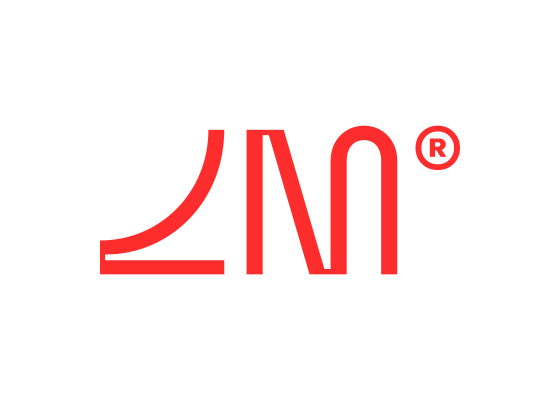
The Valve logo features a minimalist wordmark in vibrant red (#f74843), representing the privately-held company that created Half-Life, Portal, and Steam, fundamentally reshaping PC gaming through both groundbreaking titles and distribution infrastructure. This understated typographic identity reflects Valve’s engineering-focused culture and reluctance to engage in traditional marketing or corporate visibility.
The simple sans-serif letterforms convey technical precision and no-nonsense functionality, appropriate for a company structured around small autonomous teams solving complex problems. The bright red provides necessary visibility and energy while avoiding the aggressive aesthetic common in gaming branding. Valve famously operates without traditional management hierarchy, allowing employees to move between projects freely. This flat organizational structure finds visual parallel in the flat, unadorned typography.
The logo appears infrequently compared to most gaming companies. Valve rarely markets its products through traditional channels, instead relying on Steam’s distribution platform and word-of-mouth from passionate communities. When the wordmark does appear, it’s typically in corporate contexts, developer tools documentation, or alongside the more famous “guy with a valve in his head” opening sequence from Valve games. This restraint builds mystique around a company known for perfectionism and long development cycles.
Meaning and Symbolism
- Vibrant red color: Provides necessary energy and visibility while avoiding the aggressive or violent associations common in gaming branding.
- Simple sans-serif typography: Reflects Valve’s engineering culture, technical focus, and preference for substance over marketing spectacle.
- Minimal, unadorned presentation: Parallels Valve’s flat organizational structure and the company’s focus on products rather than corporate branding.
- Restrained usage: Builds mystique around a privately-held company that operates according to unconventional principles and timelines.
Design and History
Gabe Newell and Mike Harrington founded Valve Corporation in 1996 after leaving Microsoft, where both had worked on Windows development. The company name references the “valve” concept of controlling flow, appropriate for a studio focused on carefully refined game experiences. Half-Life’s November 1998 release revolutionized first-person shooters with its cinematic storytelling and scripted sequences, establishing Valve’s reputation for innovation.
Counter-Strike began as a Half-Life mod in 1999 before Valve hired the creators and released it officially in 2000. This pattern of absorbing talented modders and community projects became a Valve trademark. Team Fortress, Portal, and Dota 2 all originated outside Valve before the company acquired or hired their creators. The red Valve wordmark appeared consistently across these diverse properties, providing subtle unity while each game maintained distinct branding.
Steam launched in 2003 and gradually became Valve’s primary focus and revenue source. The platform generates billions annually from third-party game sales while Valve’s own development output has slowed dramatically. The company hasn’t released a major single-player game since Half-Life: Alyx in 2020, with the long-awaited Half-Life 3 becoming gaming’s most famous vaporware. The red wordmark now represents both Valve’s legendary legacy and its transformation from game developer into platform operator and hardware experimenter with products like the Steam Deck.
Typography
The Valve wordmark uses a clean, geometric sans-serif with consistent stroke weights and minimal stylistic embellishment. The letterforms feature perfectly circular bowls in the “a” and subtle details like the distinctive “V” with its precise angular construction. Character spacing is generous, creating openness and preventing the compact composition that might suggest urgency or aggression. The “e” uses a perfectly horizontal crossbar, maintaining geometric precision throughout the typeface. The wordmark appears almost exclusively in the signature red or occasionally white when reversed out of dark backgrounds. The simplicity ensures legibility at any scale, from tiny favicon applications to large corporate communications, though Valve rarely deploys the logo at either extreme given its minimal marketing presence.
FAQ
Q: Why is Valve’s logo so simple compared to other gaming companies?
A: The minimal typography reflects Valve’s engineering-focused culture and preference for letting products speak rather than investing in traditional corporate branding or marketing spectacle.
Q: What does the Valve company name mean?
A: The name references controlling flow, appropriate for a company focused on carefully refined game experiences and the Steam platform that controls PC game distribution.
Q: Has Valve changed its logo since founding?
A: The red wordmark has remained remarkably consistent since Valve’s 1996 founding, reflecting the company’s stability as a privately-held studio without external pressure to rebrand or modernize.