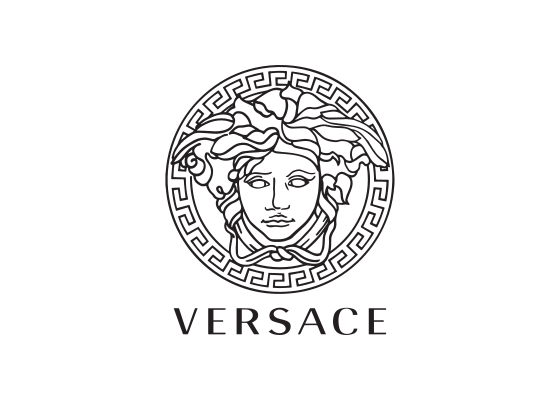
The Versace logo features the head of Medusa surrounded by a Greek meander border, embodying the Italian luxury house’s signature maximalism, baroque aesthetics, and unapologetic glamour since 1978.
Gianni Versace chose Medusa deliberately: she made people fall in love with her, and they had no way back. The myth perfectly captures Versace’s design philosophy, creating fashion so bold and seductive it becomes inescapable. The Medusa head is rendered in classical relief style, referencing ancient Greek art and the ruins of Reggio Calabria where the Versace siblings played as children. The Greek key border (meander pattern) reinforces this classical heritage while creating a structured frame for the organic form.
The near-black color (#231f20) provides sophistication and versatility, allowing the logo to appear on gold hardware, leather goods, and printed fabrics without color conflicts. This is maximalist fashion with restrained branding, where the symbol does the heavy lifting while the color palette stays neutral. The logo works equally well embossed on leather, cast in metal, or printed on silk because the form is so distinctive and the mythology so rich.
Versace is synonymous with bold prints, bright colors, celebrity culture, and Italian excess. The logo reflects this aesthetic through baroque ornamentation and classical reference. Where brands like Prada or Jil Sander embrace minimalism, Versace embraces decoration, myth, and theatrical glamour. The Medusa symbol became synonymous with 1990s supermodel culture, appearing on runway shows featuring Naomi Campbell, Cindy Crawford, and Linda Evangelista in Versace’s iconic safety-pin dresses and baroque prints.
Meaning and Symbolism
- Medusa Head: Represents irresistible attraction and power, embodying Versace’s philosophy that fashion should captivate and seduce without escape.
- Greek Meander Border: References classical antiquity and Mediterranean heritage, connecting Italian luxury to ancient civilizations.
- Classical Relief Style: Suggests timelessness, artistic heritage, and sculptural craftsmanship, elevating fashion to fine art status.
- Dark Gray Color: Provides sophisticated neutrality, allowing the logo to work across gold hardware, baroque prints, and minimalist applications.
Design and History
Gianni Versace founded his namesake house in 1978 in Milan, bringing theatrical glamour and baroque maximalism to Italian fashion. The Medusa logo emerged from Versace’s childhood memories of Roman ruins in Reggio Calabria, Calabria, where he played with siblings Santo and Donatella. The image of Medusa, whose gaze turned people to stone, became a metaphor for Versace’s seductive, inescapable design vision. The Greek key border referenced classical Mediterranean culture and elevated the brand above mere fashion into artistic and cultural territory.
Versace pioneered celebrity dressing, creating iconic looks for Princess Diana, Elton John, and Madonna. The safety-pin dress worn by Elizabeth Hurley in 1994 became one of fashion’s most recognized moments, cementing Versace’s reputation for provocative glamour. The Medusa logo appeared prominently on baroque-printed silk shirts, leather goods, and gold-toned hardware, becoming a status symbol for the aspirational luxury consumer.
Gianni Versace’s murder in 1997 shocked the fashion world, but sister Donatella Versace assumed creative direction, maintaining the brand’s maximalist aesthetic while navigating contemporary fashion cycles. The logo remained consistent through ownership changes, including Blackstone Group’s acquisition in 2014 and Michael Kors Holdings (now Capri Holdings) purchase in 2018 for $2.12 billion. Despite financial restructuring, the Medusa symbol continues to represent baroque glamour, Italian luxury, and unapologetic excess.
The logo’s staying power demonstrates the strength of Versace’s original vision. While fashion trends shifted toward minimalism in the 2000s and logomania in the 2010s, the Medusa remained relevant, appearing on everything from $500 t-shirts to $3,000 handbags to $150 million custom jewelry pieces.
Typography
When the Versace wordmark appears alongside the Medusa symbol, it uses a refined serif typeface with classical proportions. The letterforms reference Roman inscriptional capitals, connecting the brand to classical antiquity and Mediterranean heritage. The serifs are delicate, providing elegance without competing with the bold Medusa symbol. The wordmark is typically secondary to the iconic Medusa, which functions independently on products, hardware, and marketing. The combination of classical serif typography and mythological symbolism creates a cohesive brand language that positions Versace as both contemporary luxury brand and inheritor of Mediterranean cultural legacy.
FAQ
Q: Why did Versace choose Medusa for the logo?
A: Gianni Versace chose Medusa because she made people fall in love with her with no way back, perfectly capturing his vision of creating irresistibly seductive fashion.
Q: What does the Greek border pattern represent?
A: The Greek meander (key) pattern references classical antiquity and Mediterranean heritage, connecting Italian luxury fashion to ancient Greek and Roman civilizations.
Q: Who owns Versace now?
A: Capri Holdings (formerly Michael Kors Holdings) acquired Versace in 2018 for $2.12 billion, with Donatella Versace remaining as creative director since 1997.