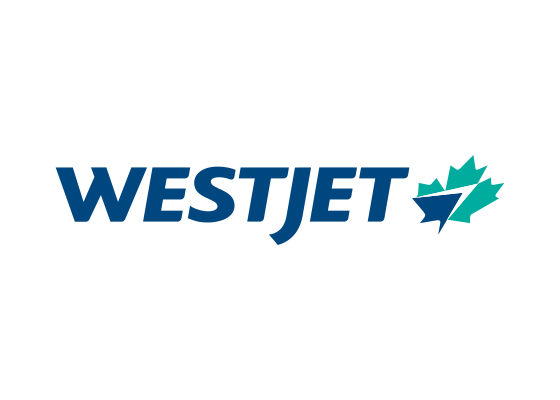
The WestJet logo combines deep blue with bright turquoise in a modern, streamlined design reflecting Canada’s second-largest airline and its transformation from budget carrier to full-service operator since its 1996 founding.
Meaning and Symbolism
- Deep blue represents trust, reliability, and the vast Canadian skies that WestJet aircraft traverse daily.
- Bright turquoise suggests energy, approachability, and the airline’s friendly service culture that differentiated it from legacy carriers.
- The vibrant two-color palette positions WestJet as contemporary and optimistic compared to traditional airline blues and reds.
- Abstract forms in the logo suggest motion, flight paths, and the dynamic nature of modern aviation.
- Clean, minimal design reflects the airline’s efficiency and value proposition for Canadian travelers.
History and Evolution
WestJet launched in 1996 as a low-cost alternative to Air Canada, initially operating three Boeing 737 aircraft on Western Canadian routes from its Calgary hub. The airline’s original branding emphasized affordability and friendliness, with a casual approach that contrasted sharply with full-service competitors. WestJet grew rapidly by combining low fares with unexpectedly high service quality, earning customer loyalty that fueled expansion.
The 2018 rebrand introduced the current turquoise and blue color scheme, coinciding with WestJet’s evolution from budget carrier to hybrid airline offering both economy and premium services. This transition included adding wide-body Boeing 787 Dreamliners for long-haul routes to Europe and the Caribbean, expanding beyond WestJet’s original short-haul focus. The modernized logo supported this repositioning while maintaining approachable personality that customers valued. Today WestJet operates over 700 daily flights serving 100-plus destinations and carries more than 25 million passengers annually as Canada’s second-largest airline and ninth-largest in North America.
Typography and Design
The WestJet wordmark uses clean, modern sans-serif typography with slightly condensed letterforms that suggest efficiency and forward motion. The unified lowercase and uppercase treatment creates approachability while maintaining professional credibility. The turquoise accent color often appears as an underline or swoosh element suggesting takeoff and upward trajectory. The blue and turquoise combination provides excellent contrast against aircraft white fuselages and works effectively across digital platforms, airport signage, and marketing materials. The minimal, contemporary aesthetic positions WestJet as a modern airline while the friendly color palette preserves the warmth that distinguished the brand from legacy carriers.
Frequently Asked Questions
Who designed the WestJet logo? The 2018 logo redesign was developed by an agency team working with WestJet’s marketing department, though specific designers have not been publicly credited for the rebrand.
When was the WestJet logo last updated? The current logo was introduced in 2018 as part of a comprehensive rebrand coinciding with the airline’s expansion into wide-body aircraft and long-haul international routes.
What do the colors in the WestJet logo represent? Deep blue represents trust, reliability, and Canadian skies, while bright turquoise conveys energy, approachability, and the friendly service culture that differentiates WestJet from legacy full-service carriers.
More logos with similar colors