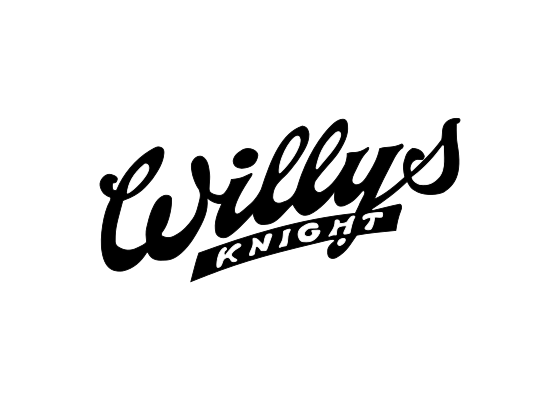
The Willys logo represents one of American automotive history’s most significant brands, forever linked to the rugged military Jeeps that helped win World War II and defined off-road capability for generations.
Meaning and Symbolism
- The bold script typography reflects the brand’s origins in early 20th-century American automotive manufacturing
- Black-and-white presentation conveys the utilitarian, no-nonsense functionality that defined Willys vehicles
- The script letterforms suggest craftsmanship and the personal signature of founder John North Willys
- Simple execution mirrors the practical, dependable nature of Willys products, especially military Jeeps
- The design’s durability allowed it to endure harsh conditions from battlefield stencils to civilian applications
History and Evolution
Willys-Overland Motors became an American automobile industry giant in the early 20th century, with founder John North Willys transforming a struggling company into the second-largest U.S. automaker by 1915. The company produced various civilian vehicles throughout the 1920s and 1930s, but achieved legendary status through its military Jeep production during World War II. Willys manufactured the MB model (commonly called the Willys Jeep) under standardized specifications, with over 360,000 units serving Allied forces worldwide. The Jeep’s reputation for reliability, versatility, and go-anywhere capability became synonymous with the Willys name.
After the war, Willys capitalized on the Jeep’s fame by producing civilian versions including the CJ (Civilian Jeep) series, station wagons, and pickup trucks. The logo appeared on vehicles ranging from compact economy cars to robust off-road machines. Willys-Overland was eventually acquired by Kaiser Motors in 1953, forming Kaiser-Jeep, and the Willys brand gradually faded as Jeep became the dominant nameplate. However, the Willys name remains iconic among Jeep enthusiasts and military vehicle collectors, representing the origin point of an automotive legend.
Typography and Design
The Willys wordmark featured flowing script letterforms that connected in the cursive style popular in early automotive branding. The design suggested personal craftsmanship and the founder’s signature, lending authenticity and heritage to the brand. The script’s moderate flourishes balanced elegance with practicality, appropriate for vehicles serving both civilian and military markets. Black was typically used for maximum contrast and durability in varied applications, from vehicle badges to military stencils to dealership signage. The logo’s simplicity ensured it reproduced effectively across manufacturing contexts, from stamped metal emblems to painted identification marks on military vehicles deployed worldwide.
Frequently Asked Questions
Who designed the Willys logo?
The Willys script logo evolved through the company’s early decades, likely developed by in-house designers or commercial artists typical of early 20th-century automotive branding, reflecting founder John North Willys’ personal signature style.
When was the Willys logo last updated?
The Willys logo remained largely consistent through the brand’s active years until the 1953 Kaiser acquisition, with the design frozen in time as Jeep became the primary brand identity and Willys transitioned into automotive history.
What do the colors in the Willys logo represent?
The black script on white (or bare metal) represented utilitarian durability and manufacturing practicality, ensuring the logo remained visible and recognizable whether applied to civilian automobiles or military Jeeps serving in harsh battlefield conditions.
More logos with similar colors