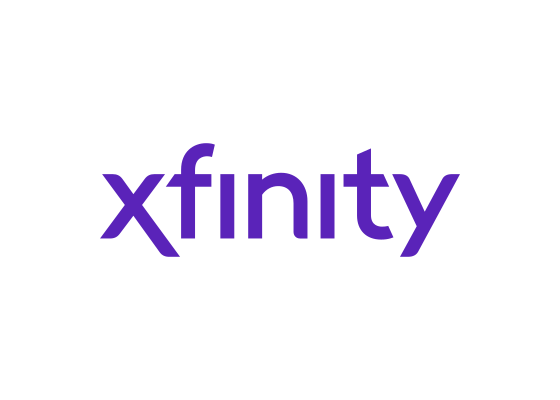
Xfinity’s logo features a distinctive purple-blue wordmark reflecting Comcast’s 2010 rebranding strategy to distance consumer services from negative corporate perceptions. As the telecommunications division of Comcast Corporation, Xfinity provides cable television, internet, telephone, and wireless services to millions of American households, offering high-speed internet, mobile plans, home security, and entertainment platforms including the X1 set-top box and Flex streaming device.
Meaning and Symbolism
- Purple-blue shade (#5a23b9) conveys innovation, premium service quality, and the digital entertainment convergence Xfinity enables through bundled offerings
- Modern, lowercase typography suggests approachability and consumer-friendly service, distancing from corporate Comcast formality
- “X” emphasis represents the intersection of internet, television, phone, and mobile services within unified customer experiences
- Tech-forward aesthetic positions Xfinity as an innovative entertainment and connectivity brand rather than traditional cable provider
- Infinity implications embedded in the “Xfinity” name suggest limitless entertainment, boundless connectivity, and comprehensive service portfolios
History and Evolution
Xfinity launched in February 2010 as Comcast Corporation’s consumer-facing brand for cable television, internet, and telephone services. The rebrand represented a strategic effort to separate consumer services from the Comcast corporate name, which had accumulated negative perceptions due to customer service complaints, billing disputes, and monopolistic practices in local markets. Comcast retained its name for corporate identity, business services, and NBCUniversal entertainment properties while marketing residential services exclusively under the Xfinity brand.
The Xfinity brand coincided with significant service innovations including the X1 platform, an advanced set-top box featuring cloud DVR, voice control, integrated streaming apps, and personalized recommendations. Xfinity also developed Xfinity Flex, a streaming device for internet-only customers, and Xfinity Mobile, a wireless service launched in 2017 leveraging Comcast’s cable network infrastructure combined with Verizon’s cellular network. These innovations positioned Xfinity as a comprehensive telecommunications provider competing with AT&T, Verizon, Spectrum (Charter), and emerging streaming platforms.
Xfinity Internet became America’s largest residential broadband provider, serving tens of millions of households with speeds ranging from basic tiers to multi-gigabit fiber connections. The company invested billions in infrastructure upgrades, expanding coverage and increasing speeds to compete with fiber providers like AT&T and Verizon. Xfinity’s bundled service model encouraged customers to combine internet, television, phone, mobile, and home security into single packages, creating sticky customer relationships difficult for competitors to break.
Despite technological innovations and service expansions, Xfinity has consistently ranked poorly in customer satisfaction surveys, facing criticism for confusing pricing, unexpected fee increases, retention tactics making cancellation difficult, and service reliability issues. The company has attempted to address these concerns through customer experience improvements, price transparency initiatives, and competitive responses to cord-cutting and streaming alternatives. As of 2024, Xfinity remains a dominant telecommunications force, navigating declining cable TV subscriptions while growing internet, mobile, and streaming customer bases.
Typography and Design
The Xfinity wordmark employs a modern, lowercase sans-serif typeface with friendly, rounded letterforms. The typography projects accessibility and contemporary design sensibility, deliberately contrasting with the corporate formality of the Comcast parent brand. The lowercase styling aligns with consumer technology and entertainment brands rather than traditional utility companies, suggesting innovation and customer-centricity.
The purple-blue color (#5a23b9) provides distinctive visual identity in the telecommunications landscape dominated by reds (Verizon), blues (AT&T), and spectrum colors (Charter). The specific shade balances corporate credibility with creative energy, suggesting both technological reliability and entertainment excitement. The color appears consistently across marketing materials, product packaging, retail stores, service vehicles, and digital platforms, creating cohesive brand recognition.
The Xfinity logo typically appears as a simple wordmark without accompanying symbols or icons, emphasizing name recognition and verbal recall. The design system accommodates numerous sub-brands including Xfinity Mobile, Xfinity Home, Xfinity Stream, and xFi (home WiFi management), creating visual family relationships through consistent typography and color while allowing product differentiation. The brand avoids telecommunications clichés like signal waves or satellite dishes, instead embracing clean, modern aesthetics that position Xfinity as a technology and entertainment company rather than a traditional cable provider.
Frequently Asked Questions
Who designed the Xfinity logo? The Xfinity logo was developed as part of Comcast’s comprehensive 2010 rebrand, likely involving major branding agencies specializing in corporate identity transformations. Specific designer or agency credits have not been prominently publicized, though the rebrand represented a significant investment in distancing consumer services from Comcast corporate identity.
When was the Xfinity logo last updated? The current Xfinity logo was introduced at the brand’s February 2010 launch and has remained relatively consistent as the service portfolio has expanded from cable, internet, and phone into mobile, home security, and streaming. Minor refinements have ensured optimal display across evolving digital platforms and service touchpoints.
What do the colors in the Xfinity logo represent? The purple-blue shade (#5a23b9) represents innovation, premium quality, digital entertainment, and the convergence of multiple services (internet, TV, phone, mobile, home security) within unified customer experiences. The color choice differentiates Xfinity from telecommunications competitors while conveying both technological reliability and creative entertainment excitement.