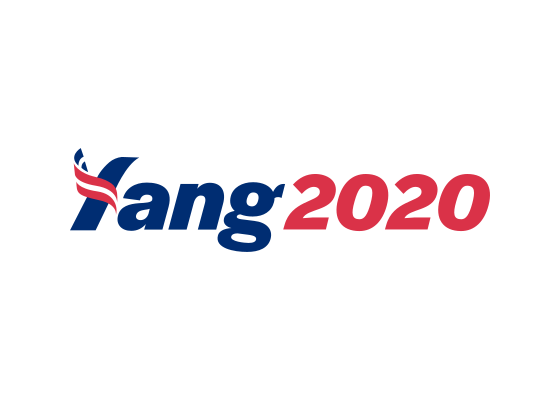
The Andrew Yang 2020 presidential campaign logo represented the entrepreneur and political outsider’s bid for the Democratic nomination through bold typography and the distinctive “MATH” acronym that became a rallying cry for his data-driven policy approach.
The Yang 2020 logo featured strong geometric letterforms in deep navy blue paired with vibrant pink accents, creating a modern political identity that stood apart from traditional red-white-and-blue palettes. The campaign’s signature element was the “MATH” cap, emblazoned with the acronym standing for “Make America Think Harder,” which became the most recognizable symbol of Yang’s outsider campaign focused on universal basic income and technology policy. The overall aesthetic skewed younger and more contemporary than typical presidential branding, reflecting Yang’s appeal to tech workers, entrepreneurs, and younger voters seeking alternatives to establishment politicians.
Meaning and Symbolism
- Navy blue foundation: Provided enough traditional political gravitas to signal serious candidacy while avoiding the aggressive patriotic red common in conservative campaigns.
- Pink accent color: Broke from political norms to create distinction in crowded Democratic primary fields, signaling Yang’s positioning as a non-traditional candidate willing to challenge conventions.
- “MATH” acronym: Represented Yang’s data-driven policy approach and his signature universal basic income proposal, framed as rational response to automation and job displacement.
- Modern geometric typography: Communicated generational change and appealed to younger voters familiar with tech startup aesthetics rather than traditional political campaign design.
Design and History
Andrew Yang filed to run for president on November 6, 2017, launching one of the most unconventional campaigns in recent Democratic primary history. As a complete political outsider with no prior elected office experience, Yang needed visual identity that acknowledged this outsider status while building enough credibility to compete against senators, governors, and a former vice president. The logo’s modern design language signaled fresh thinking rather than trying to mimic establishment political branding.
The “MATH” hat became the campaign’s breakout merchandising success and visual signature. While Donald Trump’s red “MAGA” caps dominated Republican politics and Bernie Sanders supporters wore distinctive campaign merchandise, Yang’s navy “MATH” caps created instant recognition and tribe signaling among his passionate “Yang Gang” supporter base. The hats appeared at rallies, on college campuses, and in social media profile photos, functioning as both campaign identifier and conversation starter about Yang’s policy proposals.
Yang’s campaign centered on universal basic income, which he called the “Freedom Dividend,” proposing $1,000 monthly payments to all American adults as response to automation-driven job loss. This radical policy required visual identity that could make the concept feel rational and data-supported rather than fringe or utopian. The “MATH” framing positioned Yang’s proposals as evidence-based and inevitable responses to technological change, and the logo’s clean, modern aesthetic reinforced this technocratic positioning.
The pink accent color was particularly bold for a male presidential candidate in 2020. Political consultants typically advise men to avoid pink due to gender associations, but Yang’s campaign embraced the color as point of differentiation. In television debate graphics and campaign materials, the pink helped Yang stand out visually in fields of candidates using predictable blues and reds. This color choice aligned with Yang’s overall brand as someone unconcerned with political conventions and willing to challenge assumptions.
Yang suspended his campaign on February 11, 2020, after disappointing results in early primary states. Despite the campaign’s end, the Yang Gang community maintained strong identity, and the MATH aesthetic continued appearing at subsequent political events and in discussions about automation, universal basic income, and technology policy. Yang later ran for New York City mayor in 2021, though with modified branding.
Typography
The Yang 2020 wordmark employed bold, squared-off sans-serif letterforms with substantial weight and tight spacing. The typography projected confidence and modernity, avoiding the traditional serif fonts or script elements common in political campaigns seeking to convey heritage or warmth. The geometric construction felt appropriate for a candidate emphasizing data, technology, and rational policy analysis. Letter spacing was compact, creating strong horizontal emphasis that worked effectively on banners, yard signs, and digital graphics where the logo needed to command attention in crowded visual environments.
FAQ
Q: What did “MATH” stand for in Yang’s campaign? A: “MATH” officially stood for “Make America Think Harder,” positioning Yang’s campaign as focused on rational, data-driven policy solutions rather than emotional appeals or traditional political rhetoric. The acronym also played on Yang’s image as the “numbers candidate” emphasizing his universal basic income proposal and concerns about automation.
Q: Why did Yang use pink instead of traditional political colors? A: The pink accent created visual distinction in crowded primary debates and campaign materials where most candidates used predictable blues and reds. Yang’s outsider status and appeal to younger, more diverse voters made unconventional color choices less risky than they would be for establishment candidates. The distinctive pink helped the campaign stand out in social media feeds and television graphics.
Q: How did the logo reflect Yang’s positioning as a tech entrepreneur candidate? A: The clean, geometric typography and modern color palette echoed tech startup aesthetics rather than traditional political campaign design. This visual language appealed to Yang’s core constituency of entrepreneurs, tech workers, and younger voters while reinforcing his message about technology-driven economic disruption and the need for forward-looking policy solutions like universal basic income.
More logos with similar colors