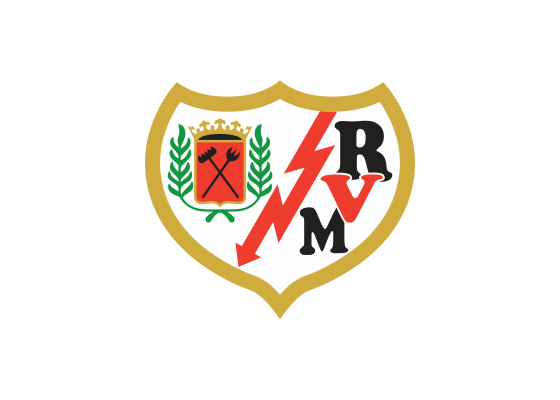
The Rayo Vallecano logo features a distinctive diagonal red sash cutting across a white field, creating one of Spanish football’s most recognizable and politically progressive club badges. This design represents Madrid’s working-class Vallecas neighborhood and embodies the club’s reputation as “the people’s team.”
The badge centers on a bold red diagonal stripe, known as the “franja roja,” running from top left to bottom right across a white shield. This striking graphic element creates immediate visual impact and translates powerfully to the club’s kit, where the diagonal sash has become an iconic design feature. The shield format provides traditional football crest structure while the simple red and white palette ensures clarity and strong brand recognition. The diagonal orientation differentiates Rayo from clubs using horizontal or vertical stripes, creating a unique position in Spanish football’s visual landscape.
Rayo Vallecano’s identity extends beyond aesthetics into social and political activism. The club represents Vallecas, a historically working-class Madrid neighborhood known for left-wing politics and cultural resistance. The badge’s simplicity and directness mirror the club’s no-nonsense, community-focused approach. Unlike Madrid’s giant clubs Real and Atlético, Rayo embraces its underdog status and community roots, with the red sash symbolizing both the club’s fighting spirit and connection to working-class values.
Meaning and Symbolism
- Red diagonal sash: The “franja roja” creates Rayo’s distinctive identity and represents the club’s fighting spirit
- White background: Clean field that enhances the impact of the red stripe and ensures versatility
- Shield shape: Traditional football crest format connecting the club to football heritage
- Simple palette: Red and white colors create clear, powerful visual communication
- Diagonal orientation: Unique stripe angle differentiates Rayo from other striped clubs
Design and History
Founded on May 29, 1924, Rayo Vallecano has spent most of its history alternating between Spain’s top two divisions. The club’s modest 14,708-capacity Campo de Fútbol de Vallecas stadium embodies Rayo’s community-focused identity, in stark contrast to the massive stadiums of Madrid’s bigger clubs. Rayo reached the UEFA Cup quarterfinals in 2000-01, representing the club’s peak European achievement.
The diagonal red sash has remained constant throughout Rayo’s visual identity evolution, representing continuity amid the club’s on-field fluctuations. This commitment to recognizable design creates strong brand equity in Madrid’s competitive football market. The badge effectively communicates Rayo’s position as Madrid’s third club and proudly working-class alternative to the establishment giants, resonating with supporters who value community connection over commercial success.
Typography
Rayo Vallecano’s wordmark uses straightforward, bold letterforms that complement the direct visual approach of the diagonal sash. The typography reflects the club’s unpretentious, community-focused identity, avoiding ornate or aristocratic styles in favor of clear communication that works across all applications.
FAQ
Q: What does the red diagonal sash in Rayo Vallecano’s logo represent? A: The diagonal red sash, or “franja roja,” is Rayo’s defining visual element and represents the club’s fighting spirit and working-class identity. This distinctive stripe differentiates Rayo from other Spanish clubs and creates immediate recognition on the pitch.
Q: Why is Rayo Vallecano called “the people’s team”? A: Rayo represents Vallecas, a working-class Madrid neighborhood with strong left-wing political traditions. The club embraces community values, political activism, and fan ownership principles, creating an identity distinct from Madrid’s wealthier, more commercial clubs.
Q: How does Rayo Vallecano compare to other Madrid clubs? A: While Real Madrid and Atlético Madrid dominate Spanish football, Rayo Vallecano serves as Madrid’s grassroots alternative. The club’s smaller stadium, community focus, and progressive politics create a unique identity that resonates with supporters seeking authentic local connection over global brand power.
More logos with similar colors