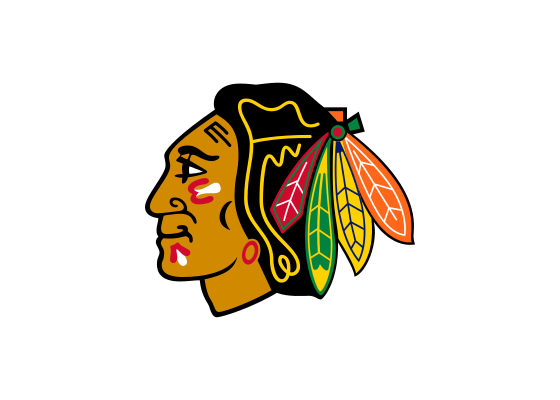
The Chicago Blackhawks logo depicts a Native American profile in traditional dress with detailed feather headdress, honoring the Sauk leader Black Hawk while creating one of sports’ most artistically accomplished and culturally complex identity marks.
The Blackhawks logo represents both exceptional design execution and ongoing cultural conversation. Created in 1926 by Irene Castle (wife of team founder Frederic McLaughlin), the mark depicts Black Hawk, an actual 19th-century Sauk military leader who resisted U.S. expansion into Illinois. The design demonstrates portrait illustration sophistication rare in sports logos, with carefully rendered facial features, traditional war paint, and multicolored feather details that communicate respect and artistic care.
The mark’s cultural complexity has intensified over decades as Native American advocacy groups have challenged sports teams using Indigenous imagery. Unlike more caricatured depictions (Cleveland’s former Chief Wahoo), the Blackhawks logo presents Black Hawk with dignity and historical accuracy, leading some tribal representatives to view it differently than overtly disrespectful imagery. This nuanced position doesn’t resolve the larger debate but acknowledges the design’s artistic merit and intent toward respectful representation.
Meaning and Symbolism
- The portrait depicts Black Hawk (Sauk chief, 1767-1838), a historical figure who defended tribal lands against U.S. expansion in Illinois
- Team name honors the 86th Infantry Division’s nickname “Blackhawk Division” in which founder Frederic McLaughlin served during WWI
- Four feathers represent four Stanley Cup championships initially, though the count no longer matches the team’s six total victories
- Red and blue war paint references Sauk warrior traditions while the multicolored feathers (green, yellow, orange, red) suggest natural bird plumage
- Detailed illustration style conveys respect and artistic care rather than caricature or mascot treatment
Design and History
Irene Castle designed the original 1926 logo, working from historical references to Black Hawk to create a respectful portrait rather than generic or stereotypical imagery. The mark debuted in black and white before adopting color in 1935, with the red skin tone initially sparking controversy until the team shifted to more naturalistic brown tones in 1941. This early course-correction demonstrated awareness of representation issues long before they became mainstream concerns.
The logo has evolved primarily through technical refinement rather than conceptual redesign. The 1955-1965 versions added facial detail and war paint, while subsequent updates adjusted color saturation, outline weights, and feather details. The current iteration maintains the 1965 foundation while benefiting from improved reproduction technology that captures the illustration’s subtlety across applications.
In 2008, NHL fans voted the Blackhawks logo the league’s best, citing its artistic quality and iconic status. This recognition coexists with ongoing debates about Native American imagery in sports, creating complex cultural territory where design excellence intersects with questions of appropriateness and respect.
Typography
The Blackhawks employ bold, block capitals in their primary wordmark, with “BLACKHAWKS” appearing in condensed, all-capital letters that prioritize strength and legibility over decoration. “CHICAGO” typically appears in smaller scale above, creating clear hierarchy. The type maintains straightforward athletic character, allowing the detailed logo illustration to provide all necessary visual interest without competing typographic flourishes.
FAQ
Q: How does this logo differ from other Native American sports imagery? A: The Blackhawks logo depicts a specific historical figure with dignity and detail, avoiding caricature, bright red skin tones, or stereotypical features. Black Hawk was a real person whose resistance to U.S. expansion into Illinois gives the imagery historical grounding. This doesn’t resolve all concerns about appropriation but distinguishes the approach from overtly disrespectful depictions.
Q: Has the team considered changing the logo? A: The Blackhawks have consistently stated they honor Black Hawk as historical figure and maintain relationships with tribal representatives, but acknowledge ongoing conversations about appropriateness. Unlike the Cleveland baseball team (which changed its name) or Washington football team (which changed name and imagery), the Blackhawks have maintained their identity while emphasizing educational outreach about Sauk history.
Q: Why do only four feathers appear when the team has won six Stanley Cups? A: The feather count became fixed in the logo’s artistic composition and no longer tracks championship totals. Some interpretations suggest the colors represent elements or directions in Sauk cosmology, though the team hasn’t officially confirmed symbolic meaning beyond aesthetic balance and natural plumage representation.
More logos with similar colors